
Japan
2/13/25

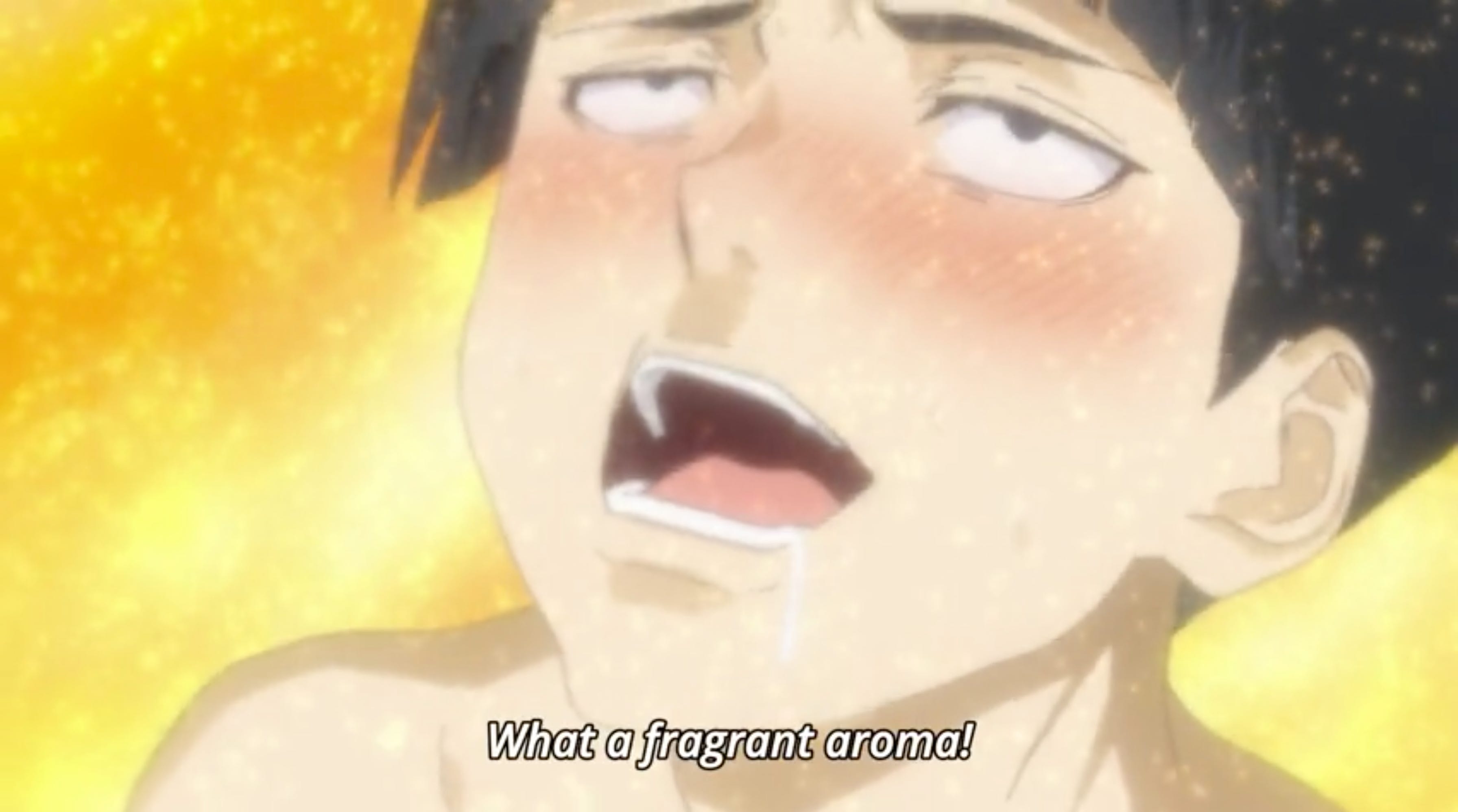
I know — you don’t need me to tell you about Japan. For you, any writing I might do on this topic is useless, extraneous, redundant. Why? Because you’ve been there yourself. You just got back recently.
What happened? Well, a few months ago, you heard the Yen was weak, you saw some pictures of nigiri on your Stories, and you bought a flight to Tokyo. Simple as. Once you booked your trip, you reached out to several friends who had been recently and they gave you recommendations. When the day arrived, you got to the airport early, but not early enough, the check-in queue was moving at a crawl, goddammit. Finally aboard, you settled into your 14-hour flight, armed with snacks from Whole Foods, sleeping pills from a coworker, and brainrot content on your iPad. Halfway through, you woke up in a daze, Dune 2 still playing, summoned from your Clonezapam slumber by a voice from the depths asking, “Chicken or pasta?”. Haneda was a blur, the taxi was expensive, but by now the adrenaline is kicking in and you rush out to eat sushi and take pictures at Shibuya crossing, “Ohaiyo Gozaimasu!” In a few days, Kyoto: kaiseki and pictures at Fushimi Inari. Then Nara, maybe, for pictures with the deer you saw on Reels. “Awww cute,” read two dozen Story replies. Finally, Osaka: okonomiyaki, and, of course, pictures at Dotonbori. “Sayonara” plus some emoji (crying? shaka hand? Japan flag?) capped your social media coverage.
Back to America. Was it all a dream?
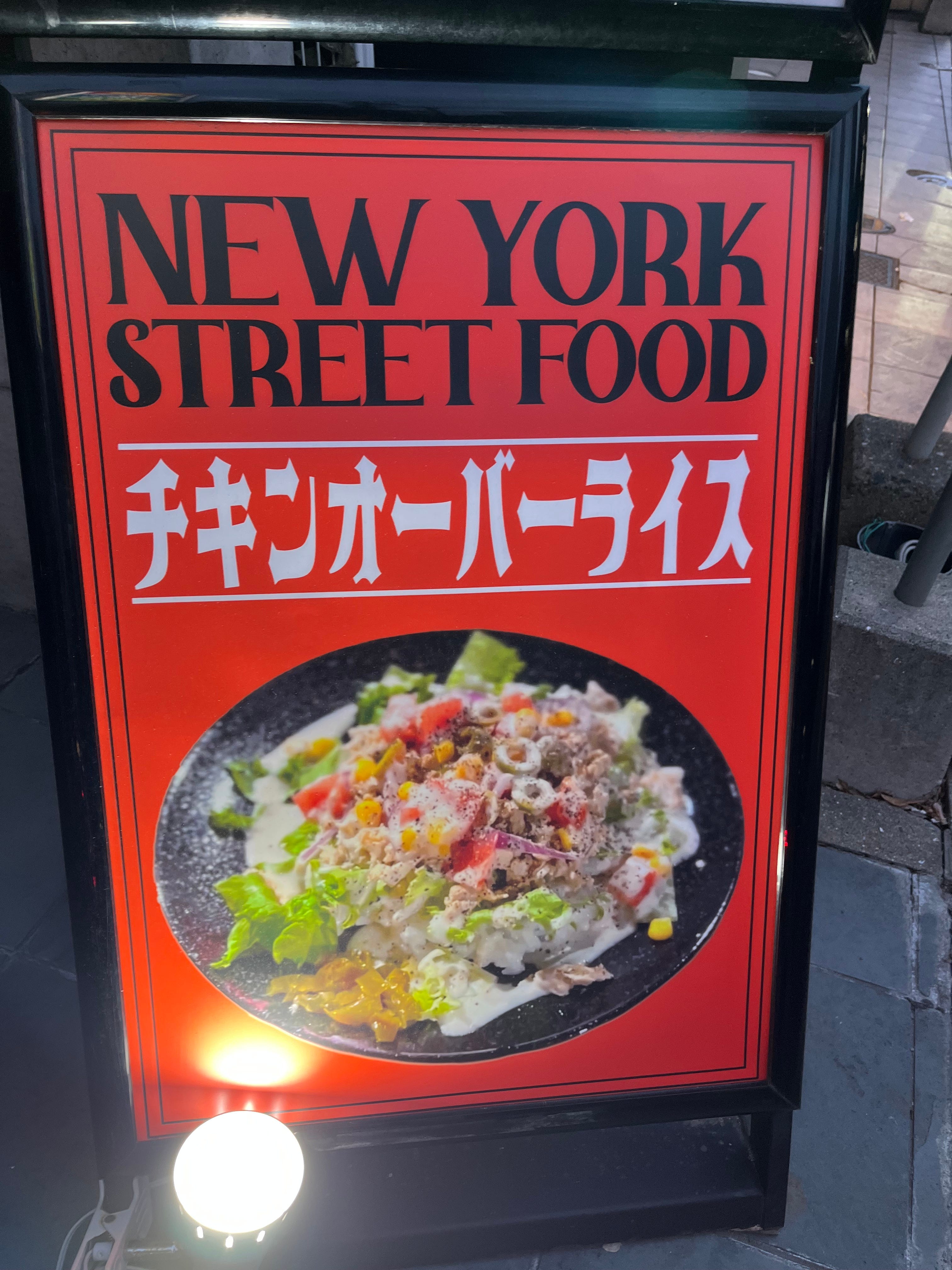
Did I miss anything? Sapporo, Hiroshima, Hakone, Kinosaki? Cherry blossoms, Kinkakuji, Tsukiji Market, a tea ceremony? And what about ramen, tonkatsu, soba, tempura, onigiri, chanko nabe? You did it all; you ate it all, after you took pictures of it all; you posted it all; you went home and missed it all; and now it’s your turn to give recommendations to the many friends planning their own trip to Japan. Rinse and repeat.
I love that for you. Japan is great, right?
If I’m wrong, and this story is unfamiliar, if you haven’t been: don’t feel bad. At the end of the day, Japan is the same as everywhere else, just a bit different. Just remember that Japanese people want to leave Japan, just like you want to leave wherever you’re from. You want to eat sushi and wear Issey, and Japanese people want to eat burgers and wear Levi’s. Tale as old as time. Grass is greener etc.
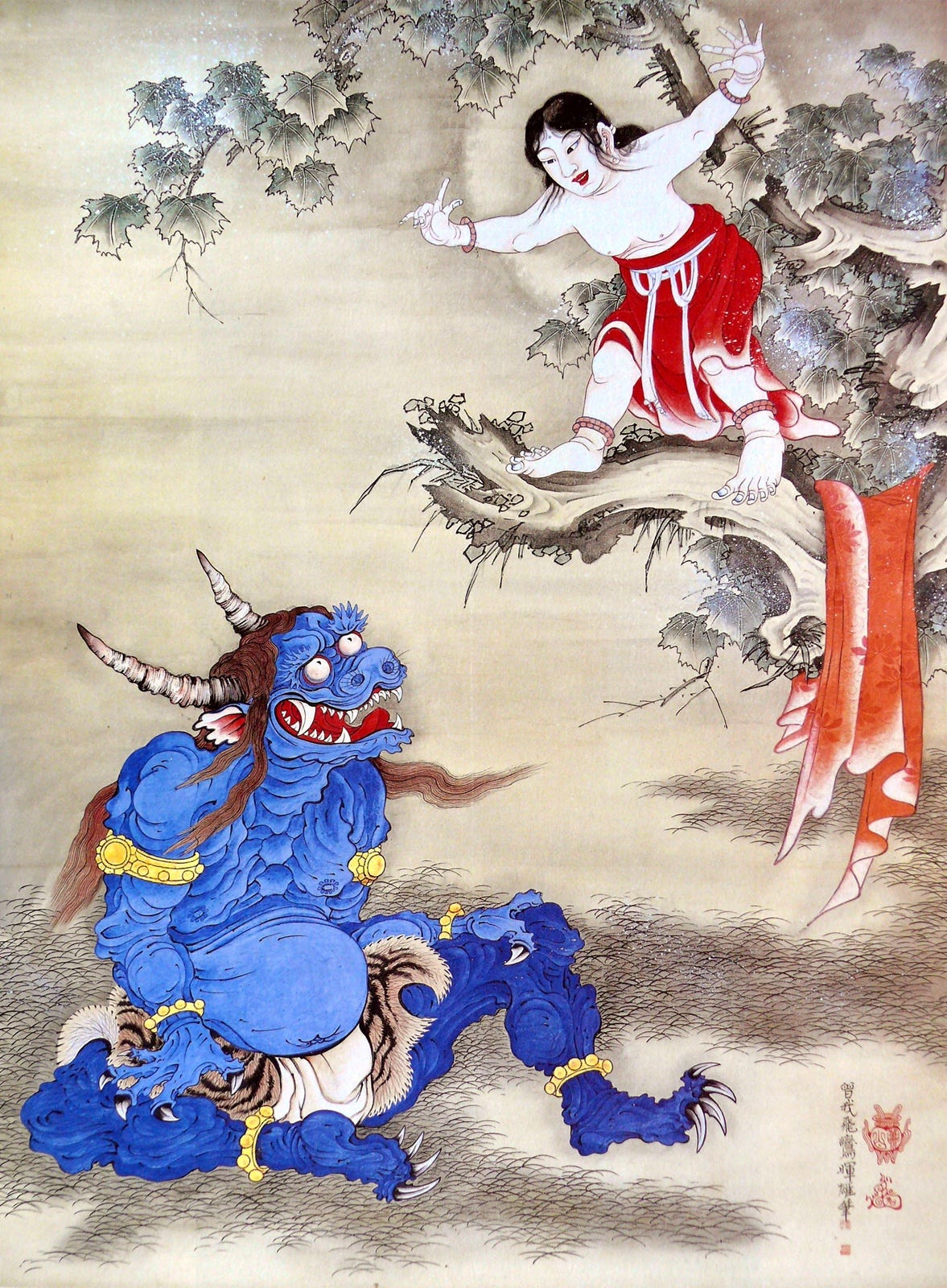
America did an excellent job of brainwashing generations of post-War Japanese into idolizing our way of life. Those effects can still be felt today; seen, for example, in the price of deadstock American vintage clothing, or in rates of cosmetic blepheroplasty. Post-War Westernization is perhaps the defining 20th century Japanese story. But maybe now, in the 21st century, the pendulum has begun to swing in the other direction. If Japan has started to take its revenge, I’m unquestionably one of its victims. In all likelihood, so are you.
~
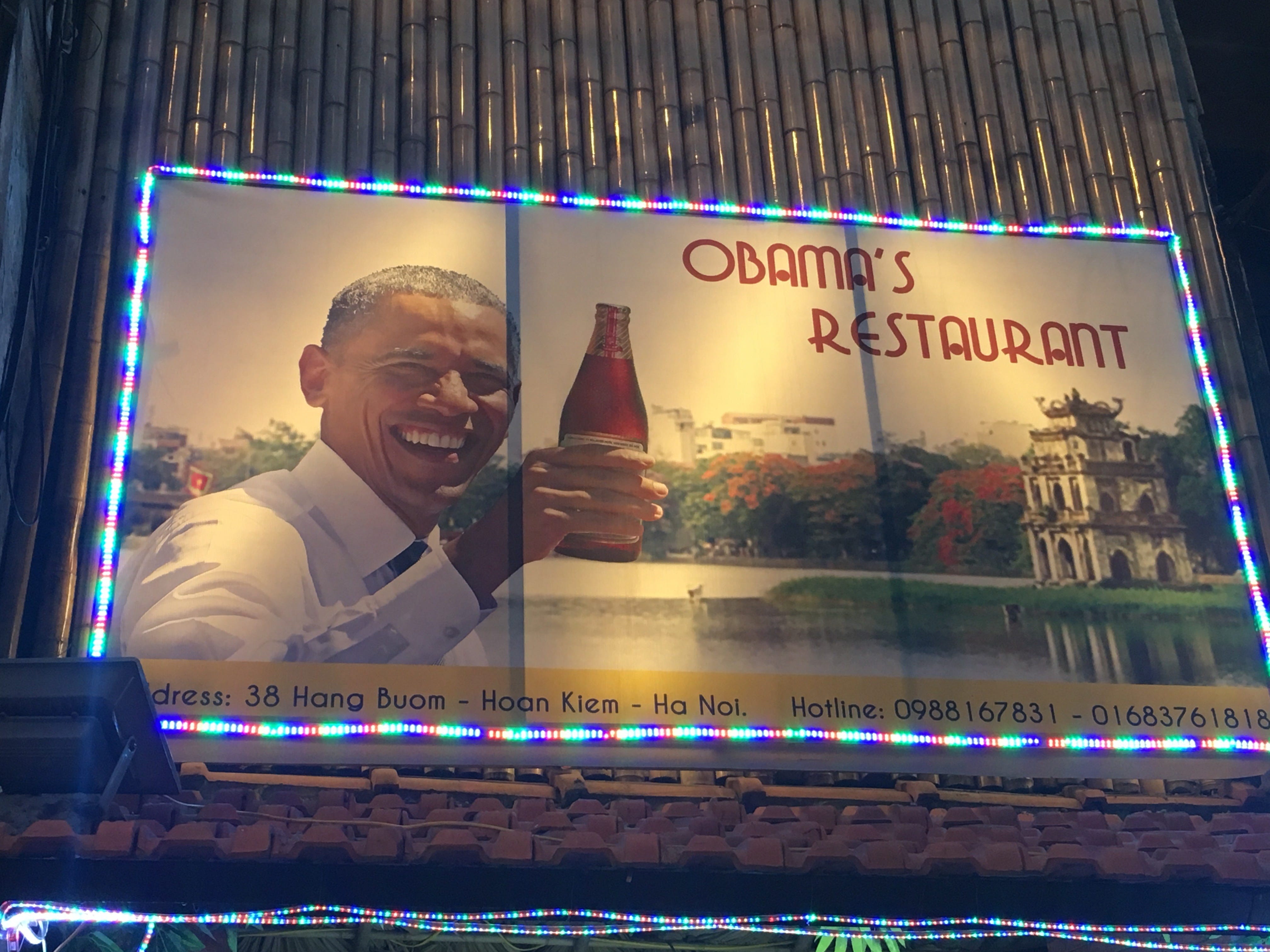
In 2017 I spent eleven weeks in Japan — one week shy of the legal limit for a tourist visa. I had left America with no plans — running away from a lot but towards nothing — hoping only that my life would change somehow over the course of my travels. I arrived in Japan by way of Vietnam, where I picked up Mycoplasma Pneumonia as well as a brutal case of food poisoning. To survive I only had a few thousand dollars, saved from my minimum wage dog-walking job in New York. The Yen was strong — I was broke.
If I’d planned the trip at all, I might have made money during Tokyo Fashion Week as a runway model. My agency in New York managed to book me for a few castings, but, in typical Japanese style, they insisted on a work visa, unlike the world of *wink wink* cash payments common in NYC.
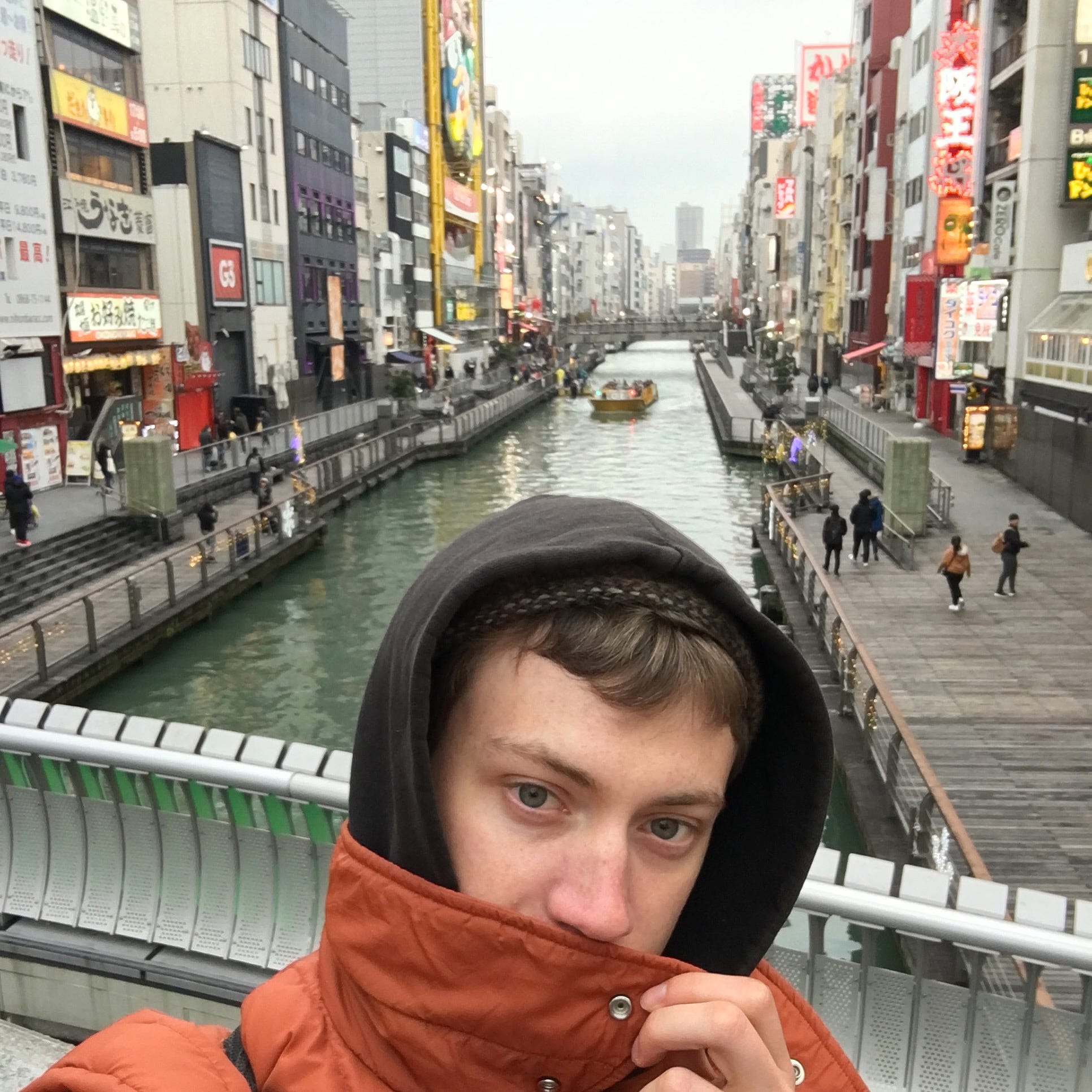
Instead, I spent the majority of those eleven weeks working on farms all across Honshu, in Wakayama, Shizuoka, Fukui, Gifu. That worked out for the best. I’ll take farmwork over modeling any day.
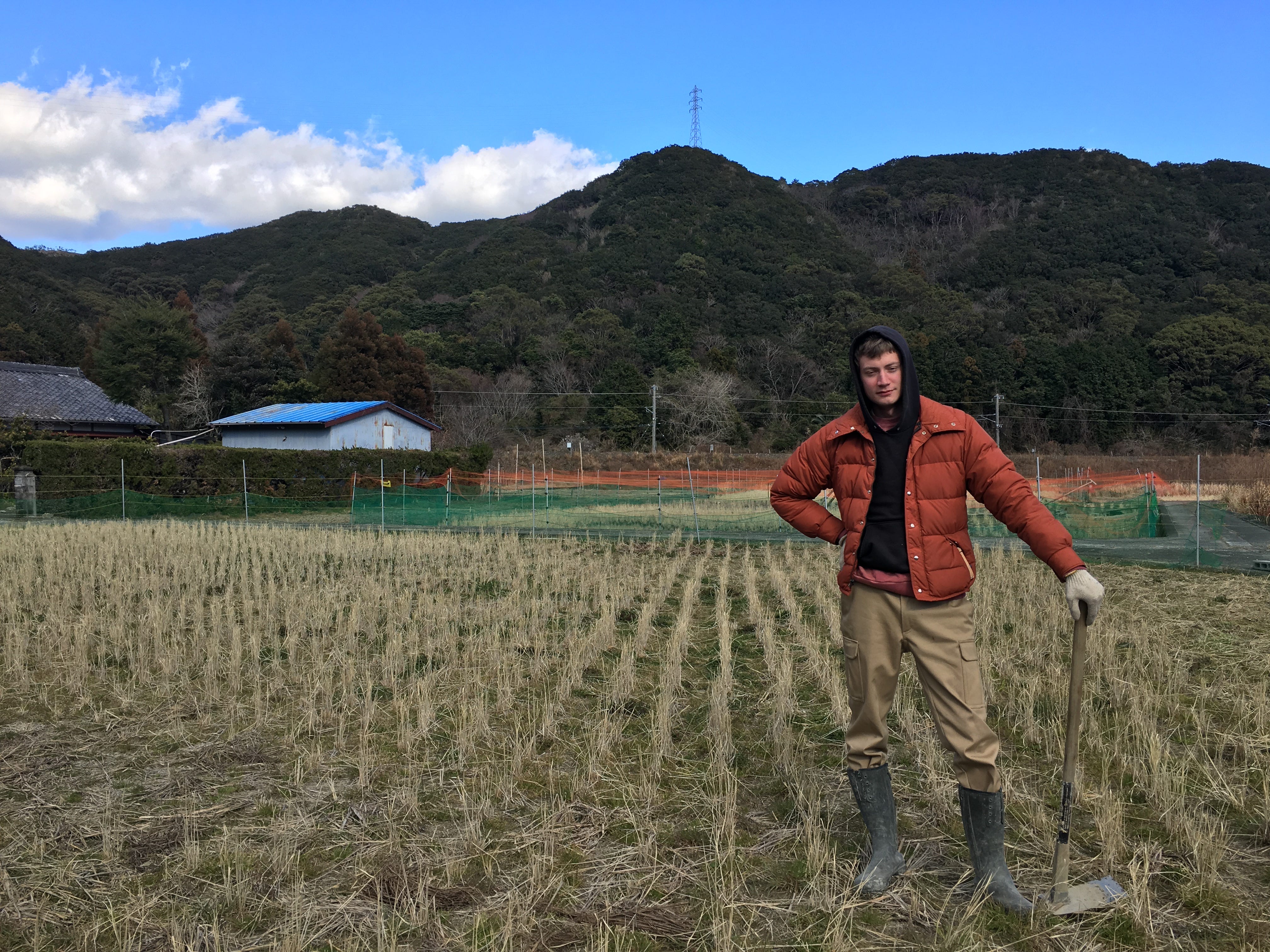
Over the course of that spring I saw Japan through the half-light of an extended daydream. I saw many beautiful things, and had as many lonely nights. Fortunately, I took pictures, so now I can almost convince myself that it was all real. I wrote feverishly — a text on storms which I hope will never see the light of day. I worked in rice paddies, I chopped wood on the mountainside, I pruned young buds in a citrus orchard. I spent very little money. I wasn’t able to eat out much.
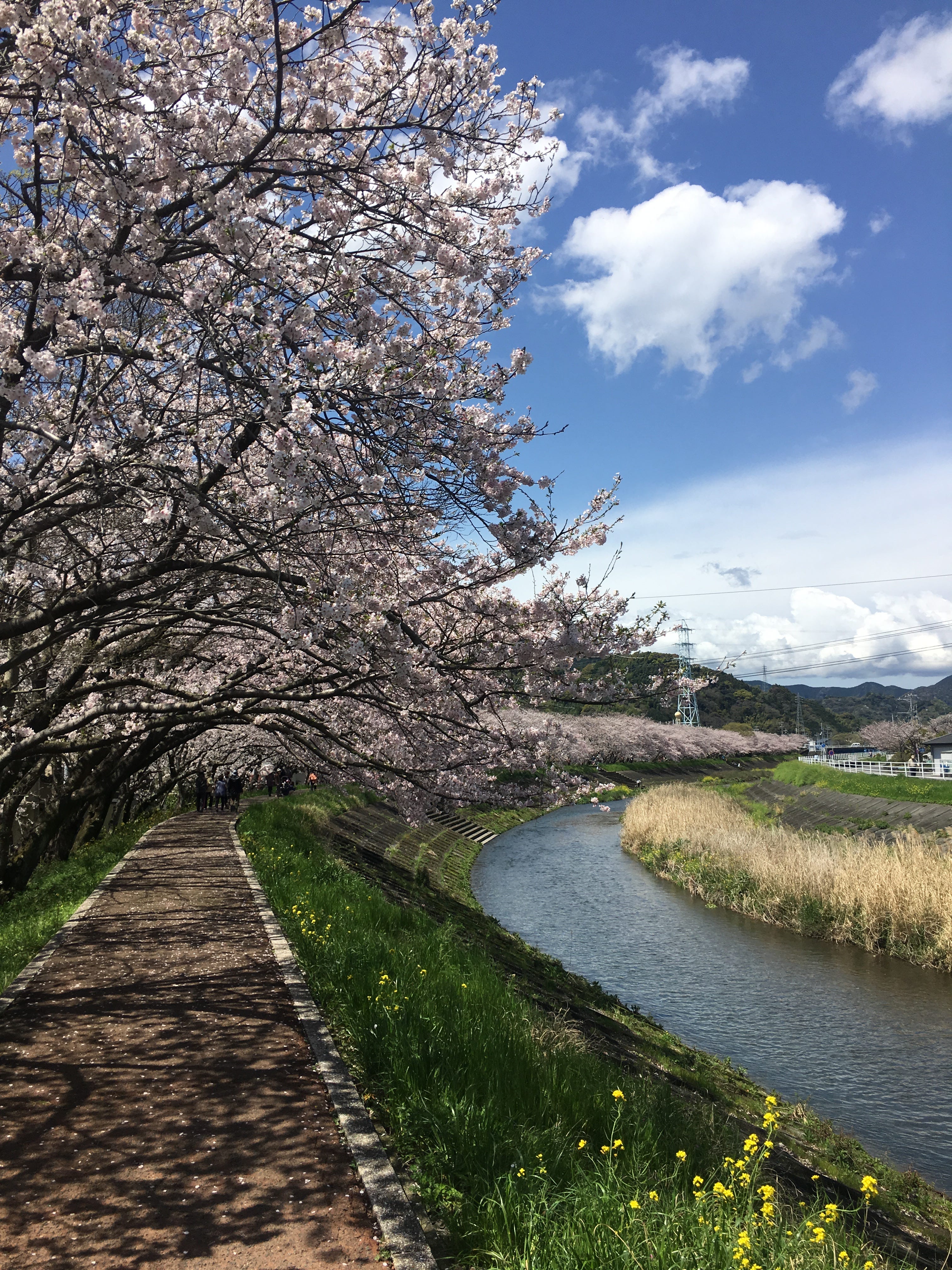
A lot happened. Nothing changed. By the end of the trip, I was working during the day, and spending my nights wandering around, drinking 100 yen juice-boxes of sake alone. When I had first left for Asia, I thought I wanted things to change — I thought that traveling in such a precarious, quote-unquote “spontaneous” way meant inviting change in my life. Looking back, it’s clear I was avoiding change, by any means necessary. Ironically, that realization would go on to help me change my circumstances, in the years to come. Life is strange.
Now, returning eight years later, I was determined to do the opposite of my first trip. Instead of being broke and alone and having no plans, I would save up as much money as I could, make a bunch of reservations, and travel with my girlfriend and some friends. Instead of eating ramen for every meal, scrimping and saving, I would ball out aggressively, with every dinner being an omakase or kaiseki et cetera. Instead of sleeping in hostels and capsule hotels, we would go to onsen towns and stay at ryokan. In this way, I hoped to complete the picture of Japan that I’d left half-finished last time, by complementing the last trip’s (passive, helpless) frugality with this trip’s (active, intentional) largesse.
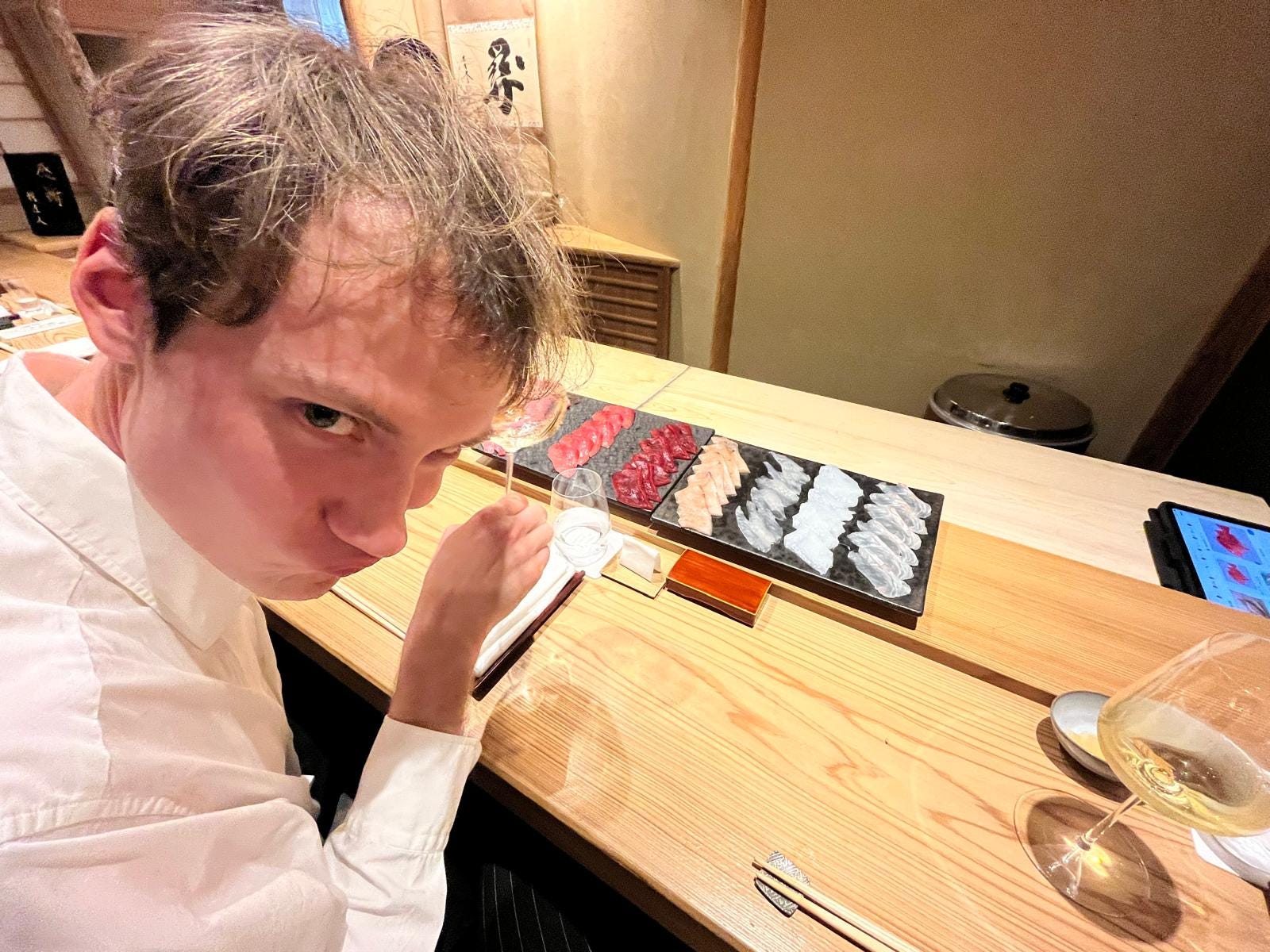
The more time you spend inside your fantasies, the more your fantasy looks like reality. There’s one difference, though: fantasy ends, reality doesn’t. Reality never ends, until it does.
“Don’t trust the stories of travelers. They see nothing. They think they see, but they only observe reflections.”
Culinary Tactics Deployed on The Front Lines of Japanese Decadence in January 2025:
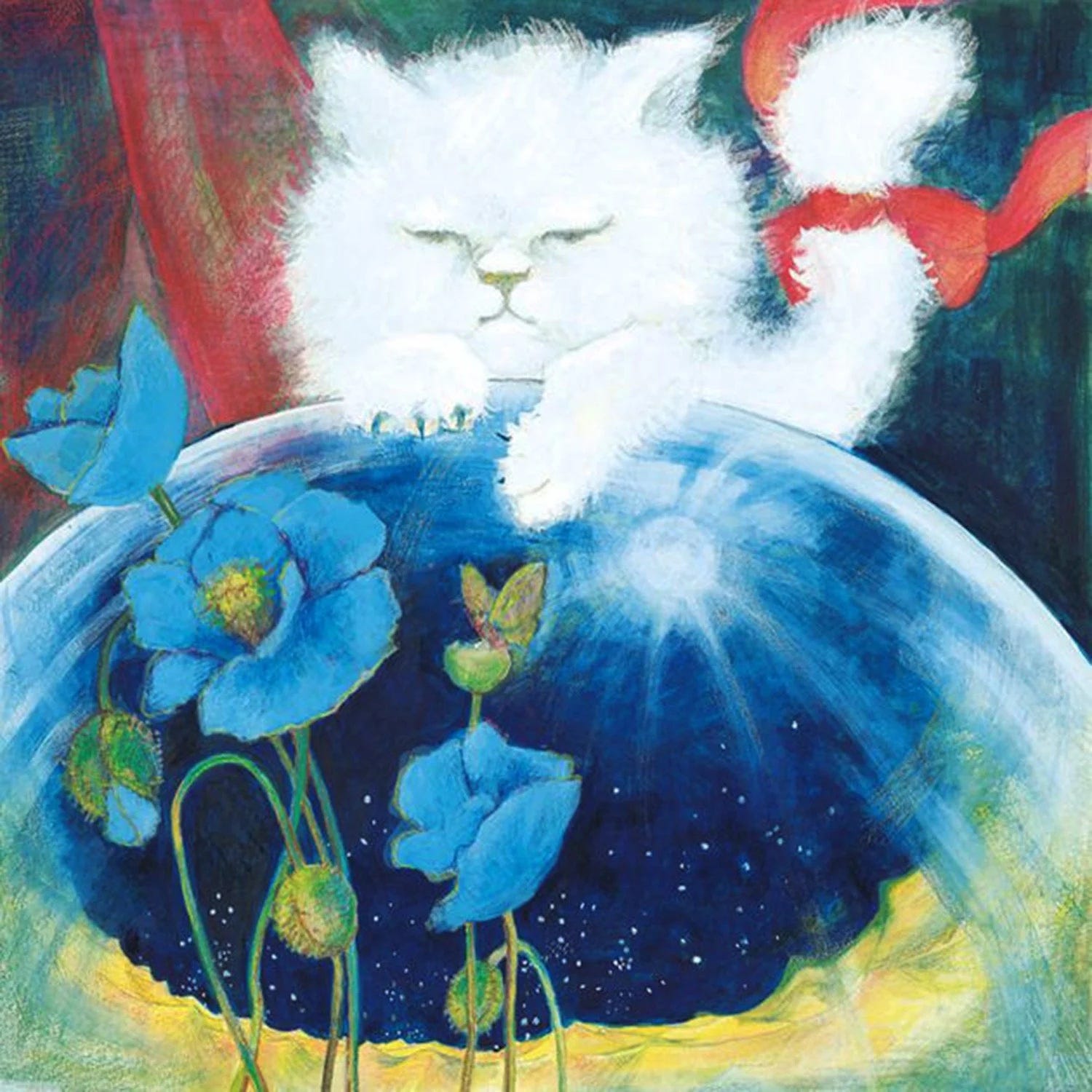
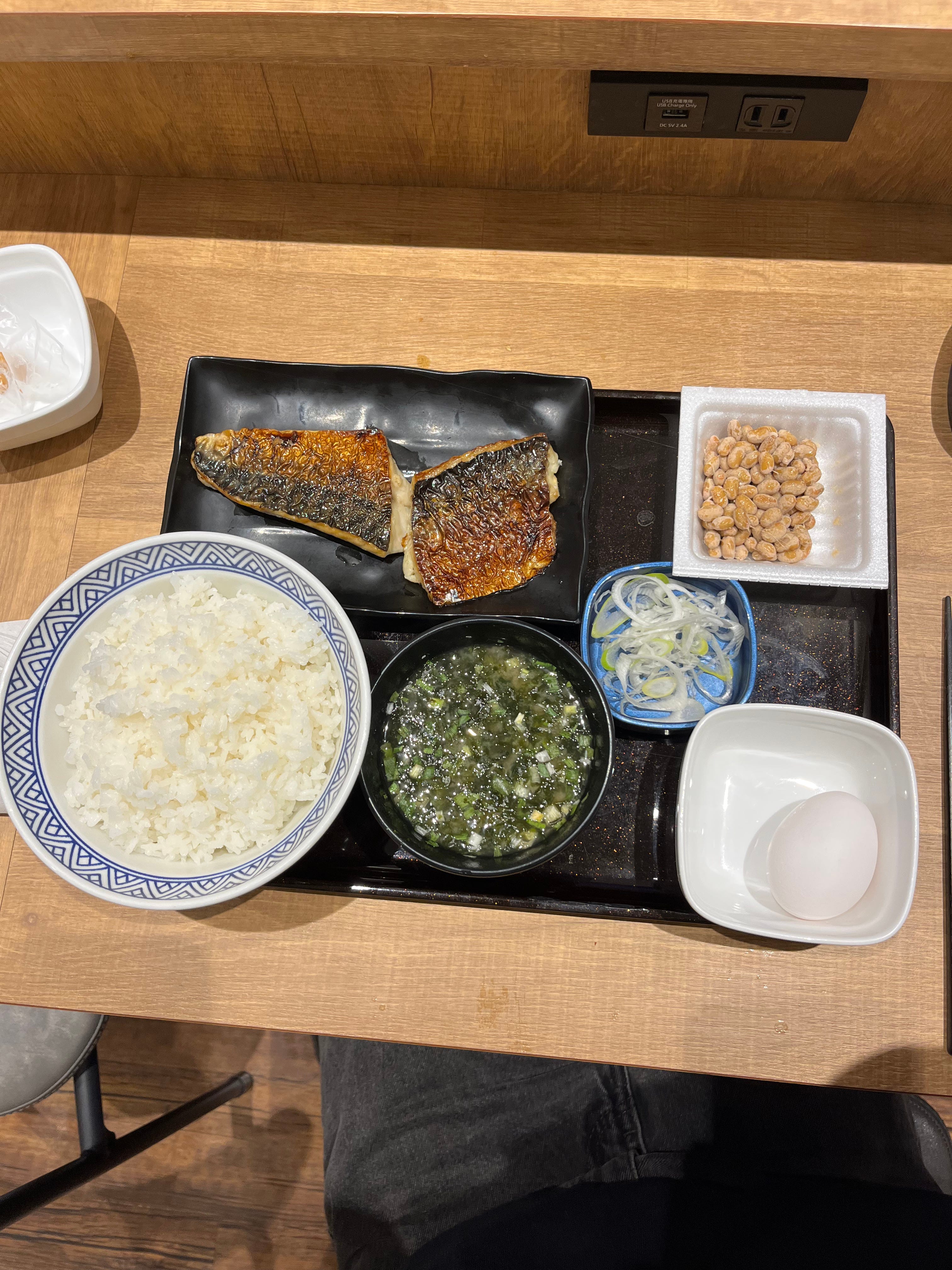
Mackerel Special Breakfast Set at Yoshinoya (Fukuoka)
“Find a breakfast you love and you’ll never have to… uh… think about what you’ll eat for breakfast again a day in your life” — Someone, Somewhere, Probably
Mackerel fillet, natto, raw egg, hot rice, miso soup, scallions. Perfection.
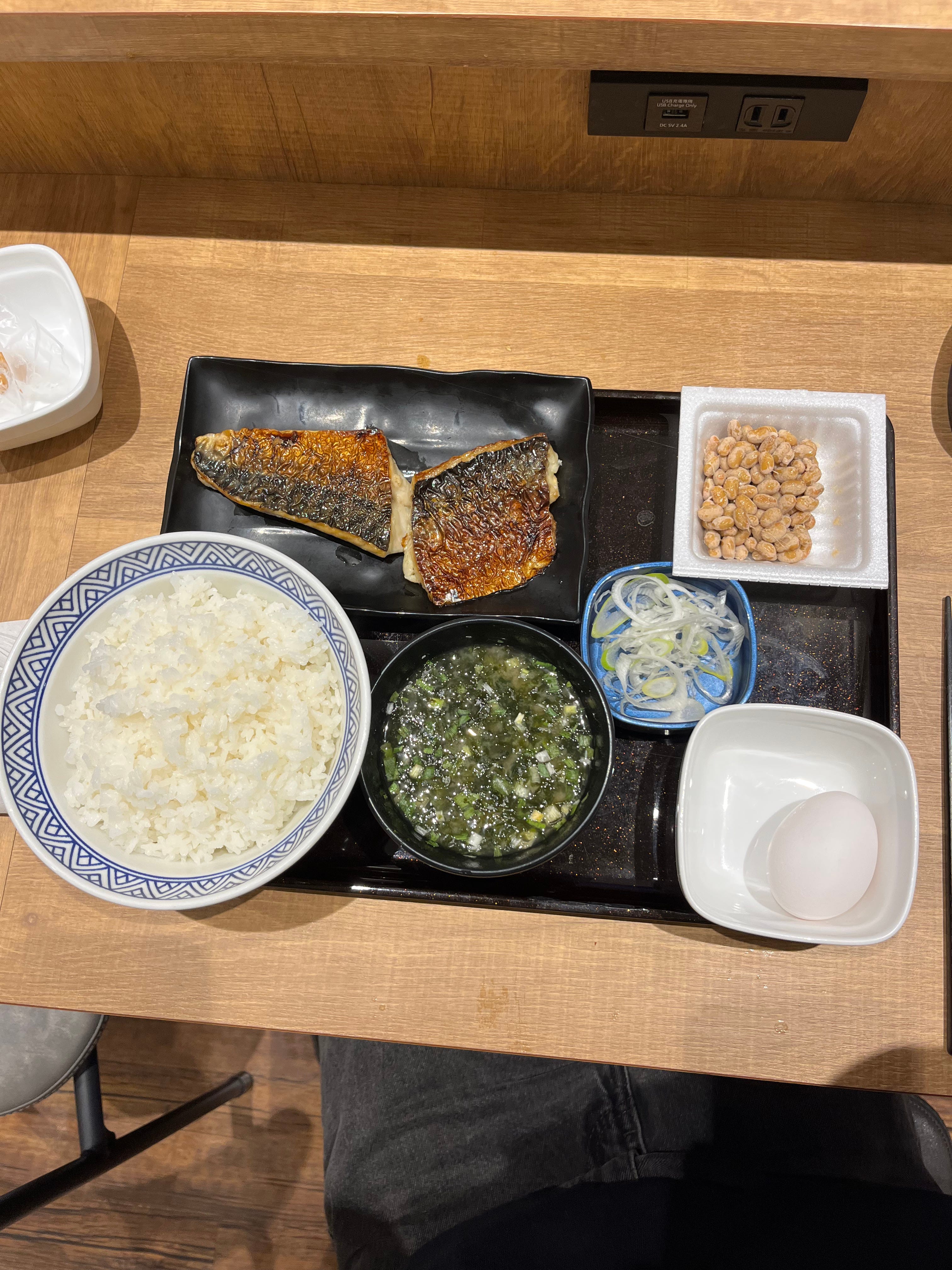
Omakase at Gahojin (Fukuoka)
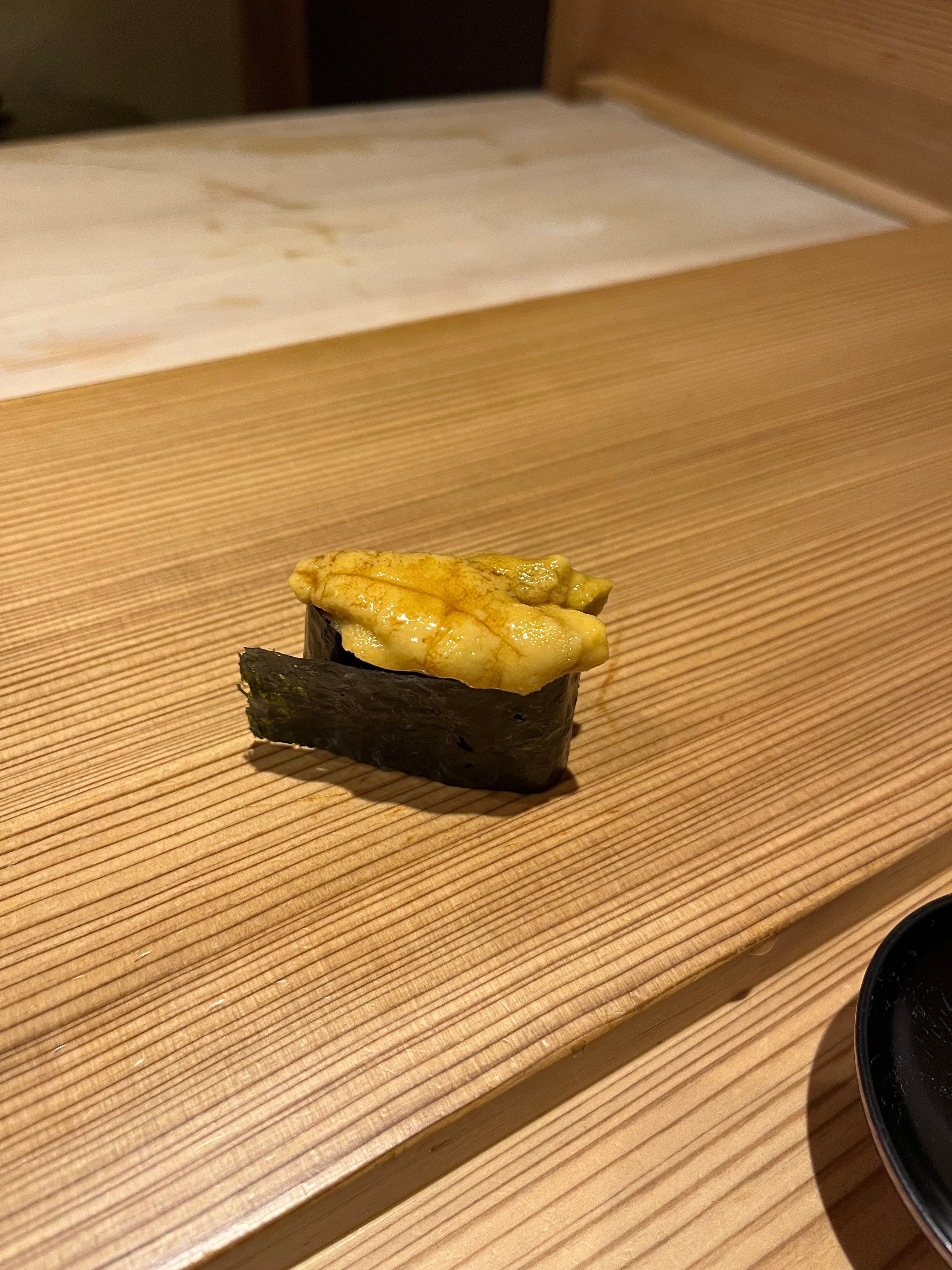
Culinary benchmark of my life thus far. Otsumami and nigiri both stupid luxurious. Leflaive Pouilly-Fuisse 2017 by the glass. Highlights included raw amaebi in a quail yolk sauce, meji-maguro (baby tuna) nigiri with its skin lightly grilled, and a shot of uni at the end, so light and fluffy that it could have been made from meringue. Next to us was a businessman who came alone, drank probably ten glasses of sake, and ate every course in rapture, his eyes closed, sweat gleaming on his flushed forehead. When Malu finally tapped out, twenty courses deep, I had to work double-time, and take down the last few dishes for two. Believe me when I say I was beyond stuffed. I had no choice. I had surrendered control. The demon of gluttony was in charge. Praise Him.
Now, after digestion, I can say that I understand Evil-Rich-Person-Lizard-Brain a bit better. Why? Because I can see why you might, say, commit war crimes in order to get rich. If you are rich you get to eat like this all the time. I mean, I don’t think anyone should commit war crimes. I’m just saying — yeah, okay, now it makes a bit more sense.
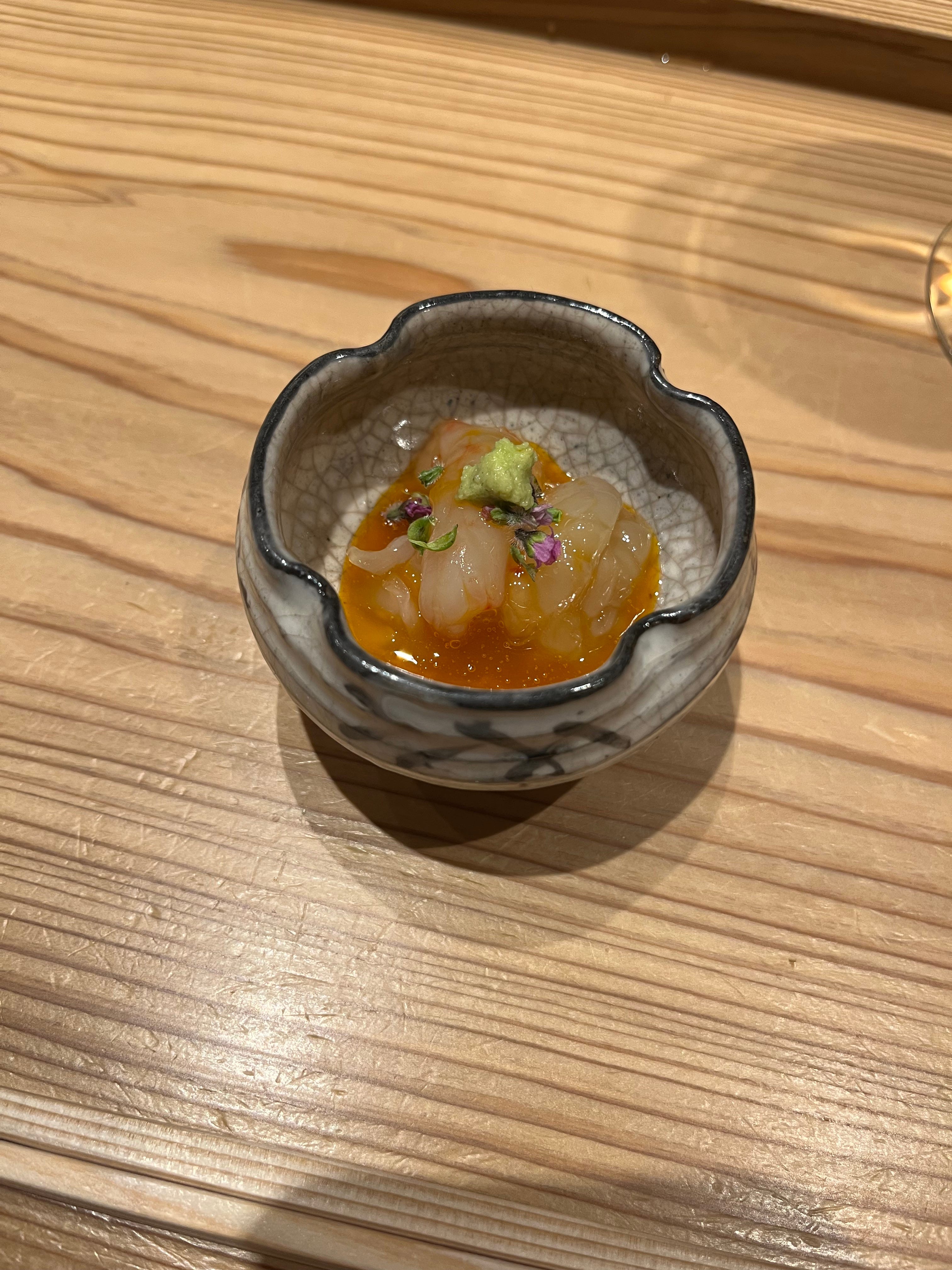
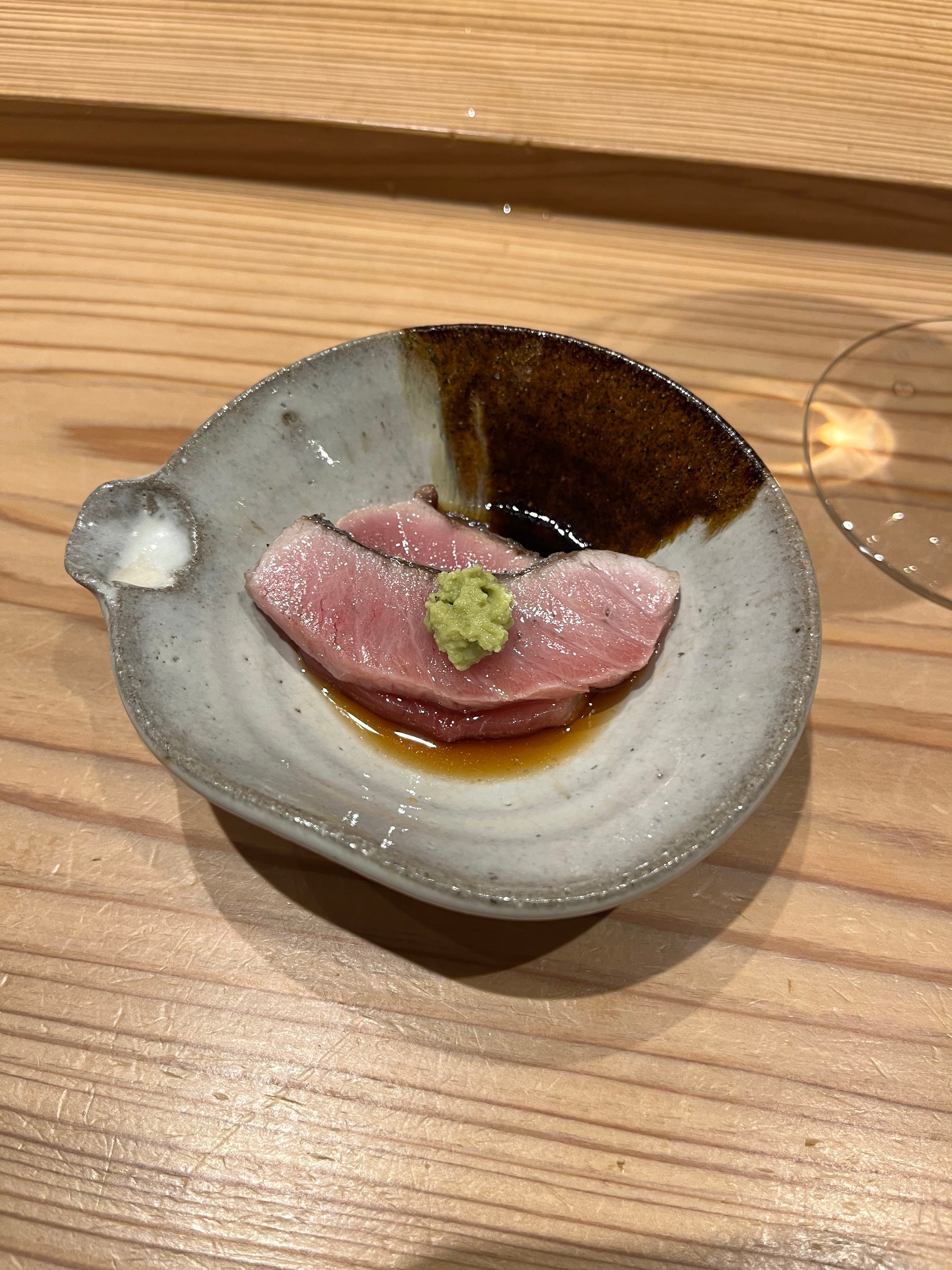
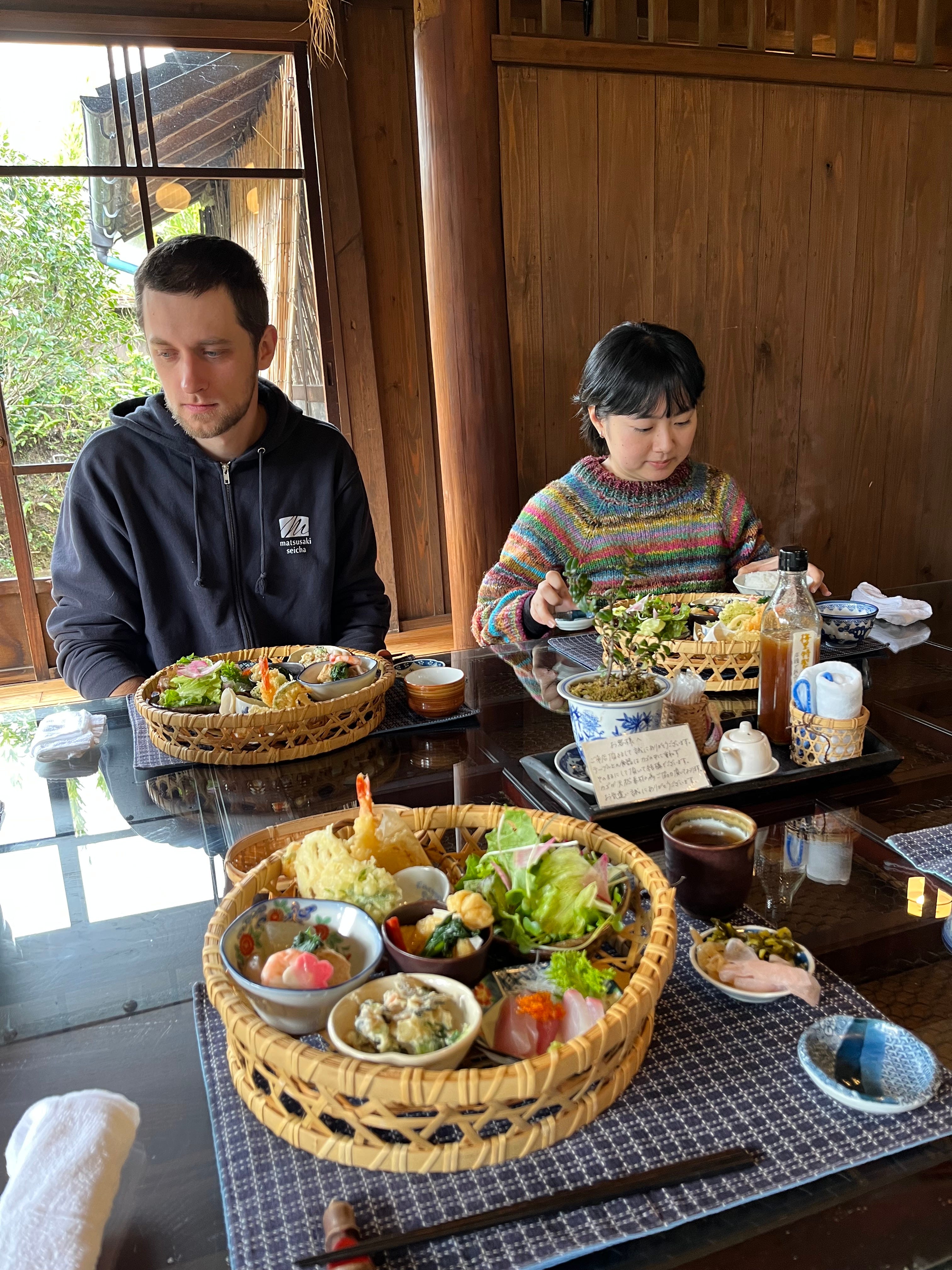
Teishoku at Kominka Bairi (Ibusuki)
Lunch in an Edo Period samurai farmhouse, next to the ocean, at the southernmost tip on Japan, with friends. Everything spoke of domestic refinement: careful, thoughtful, cozy. The most representative dish was a mochi-filled aburaage: humble, wholesome, delicious. Otherwise, a few pieces of tempura, a few pieces of sashimi, a few pieces of oden-adjacent simmered dishes, a small salad, rice from the owner’s farm. Free refills on soup and tea. Scattered thunderstorms. Intimacy.
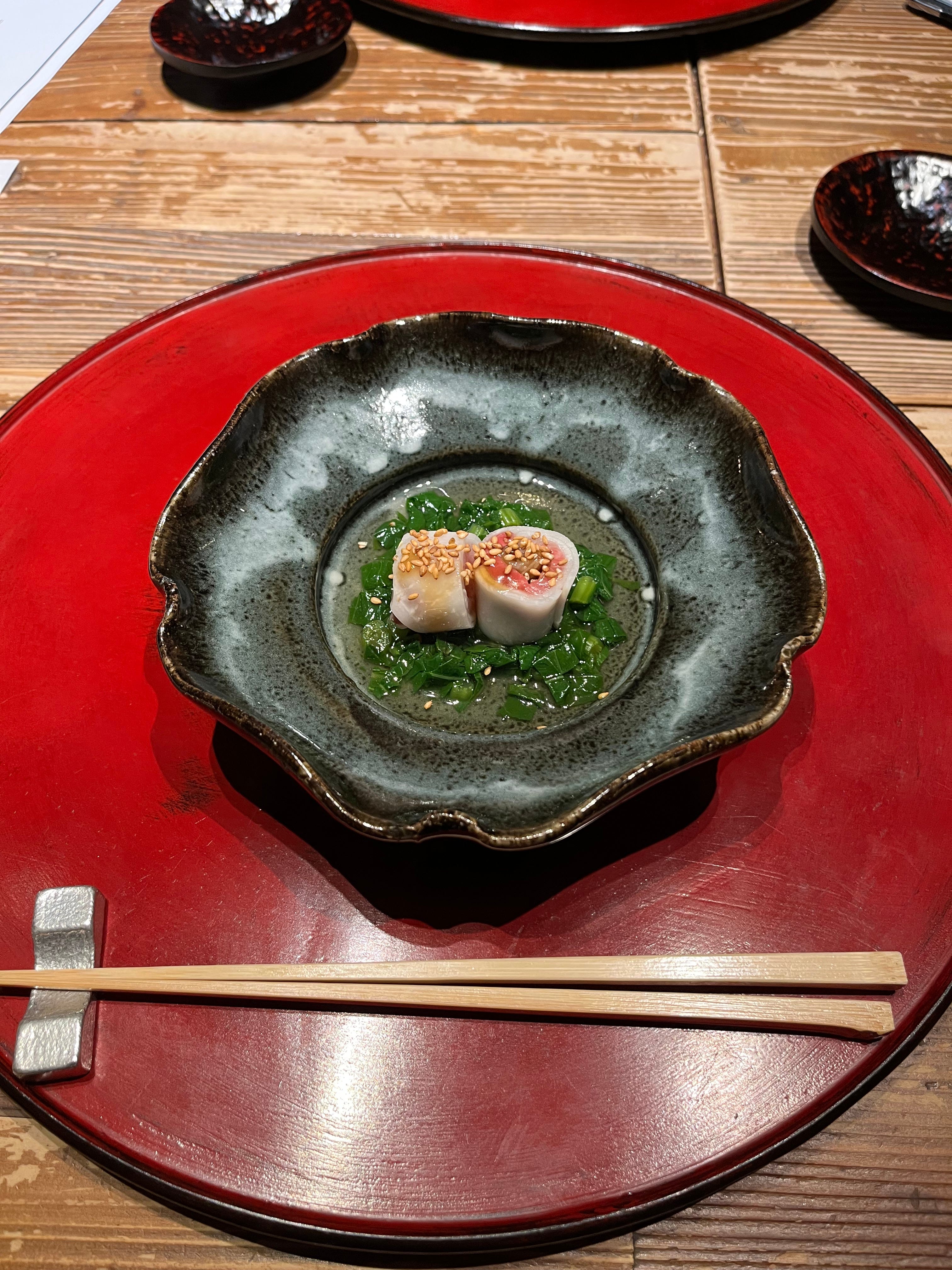
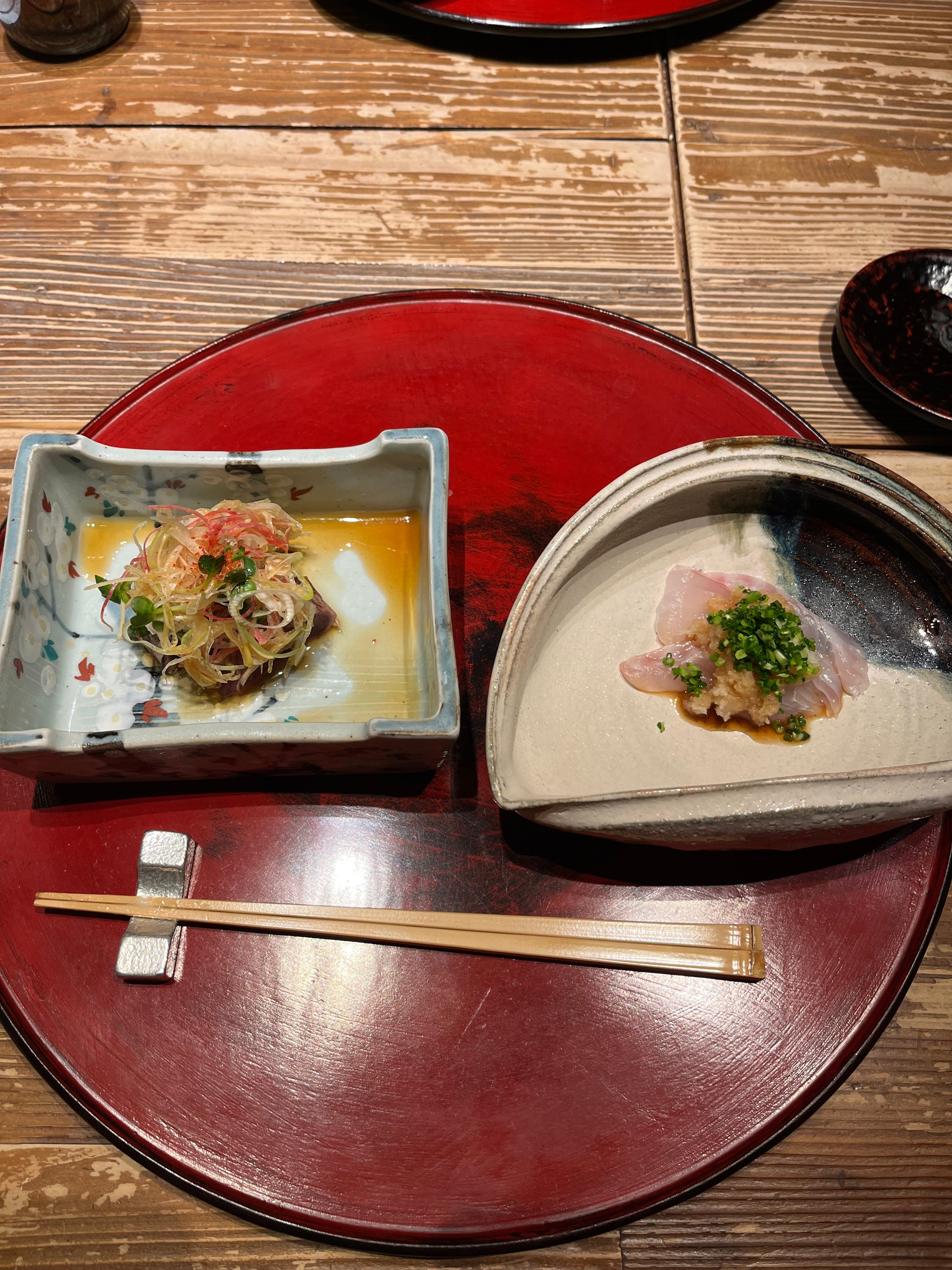
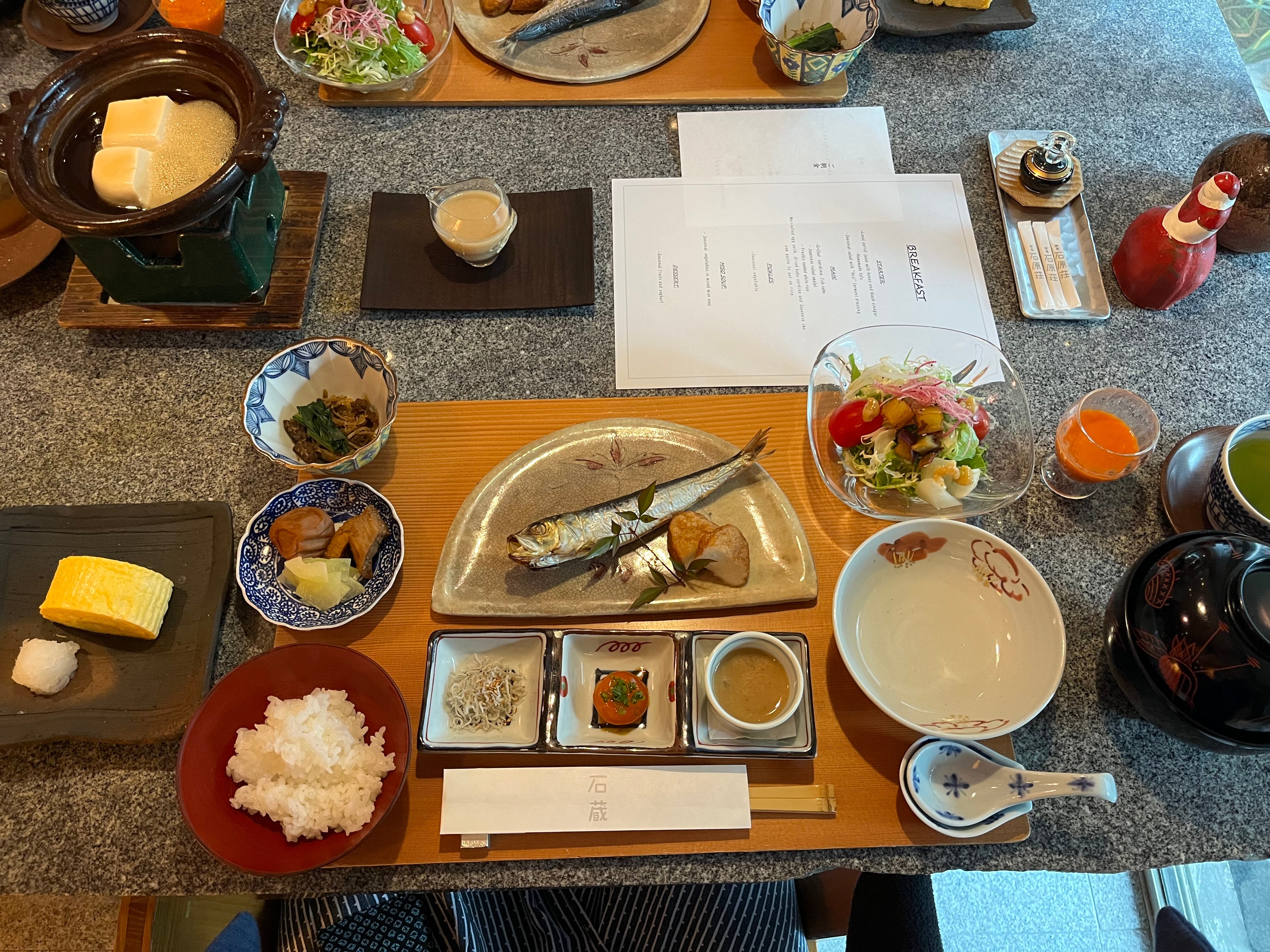
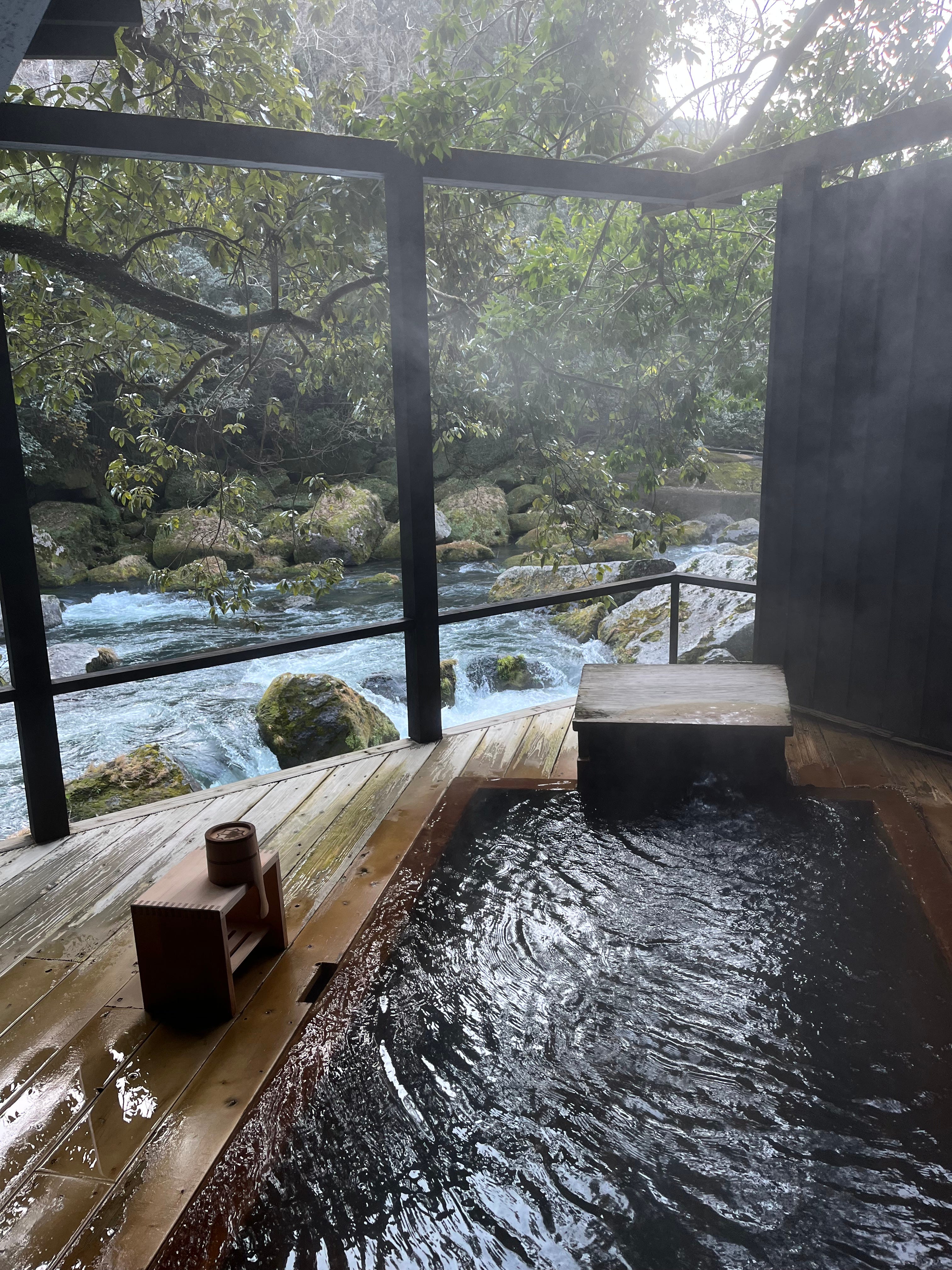
Kaiseki at Myoken Ishiharaso (Kirishima)
When faced with overwhelming beauty and gratitude, sometimes you gotta just resort to cliché: “I never wanted it to end.”
If I ever find myself at the gates of Heaven, and the Judge smiles, and allows me to re-live one one day of my life for all Eternity, this would be a strong contender.
I will be back.
Vanilla Ice Cream at Ukiyo (Shibuya)
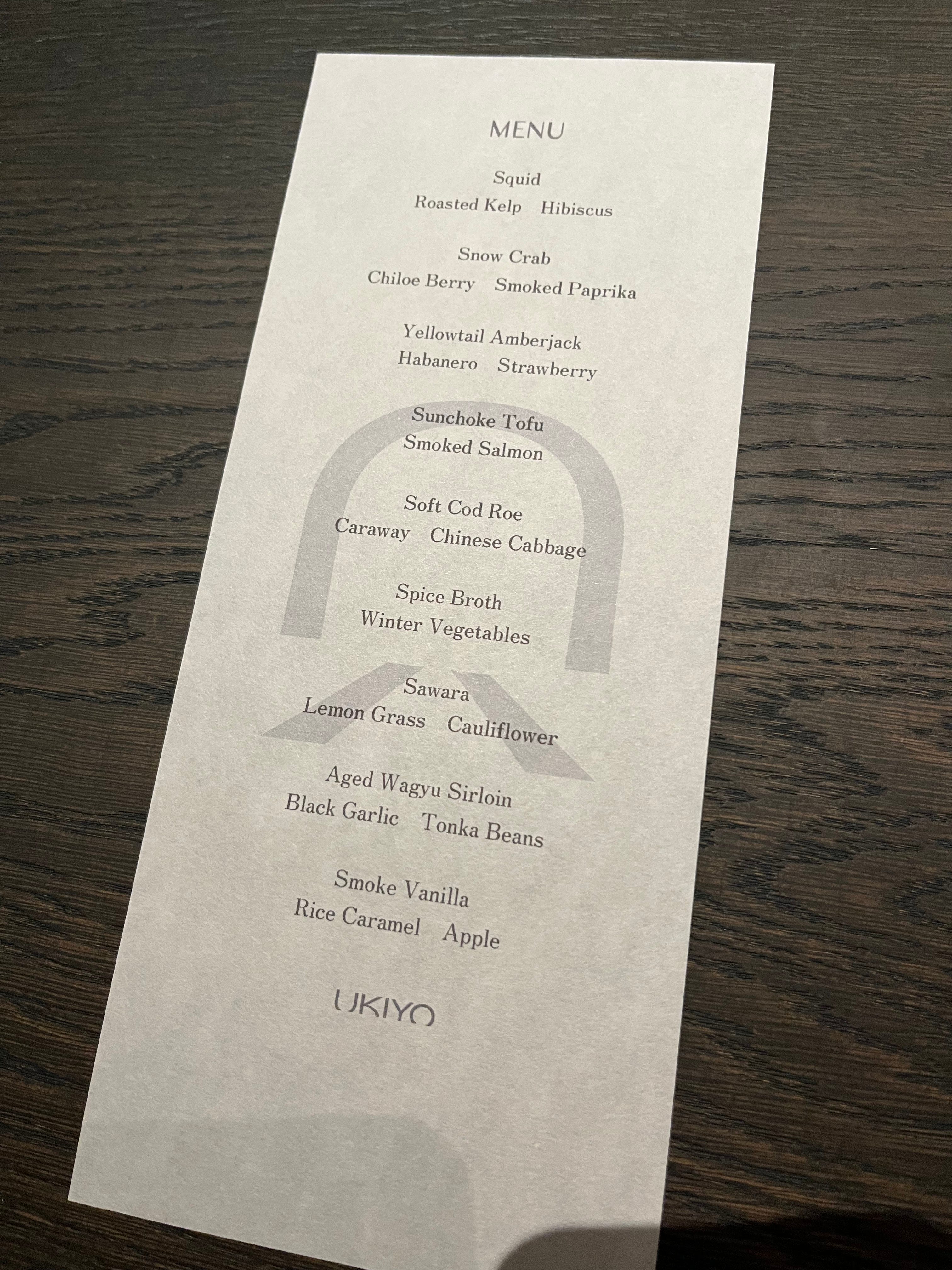
This restaurant shouldn’t exist. How is it possible to serve a prix fixe of this calibre for 8 seats a night, at like a hundred bucks per person, and still keep the lights on? Never mind also maintaining a wine list of hits, at retail prices? How does that make any sense?
It doesn’t. My guess is that it’s only possible because a. they’re extremely smart about ingredient costs b. the management is working in the kitchen/on the floor every night and c. I think you still need investors who are thinking long-term. While I can’t speak to condition c. I can say that for b. it was a treat to hear about food from the chef and about drinks from the beverage director, and for a. that Ukiyo is a model of how to make minimally expensive ingredients feel very luxurious.
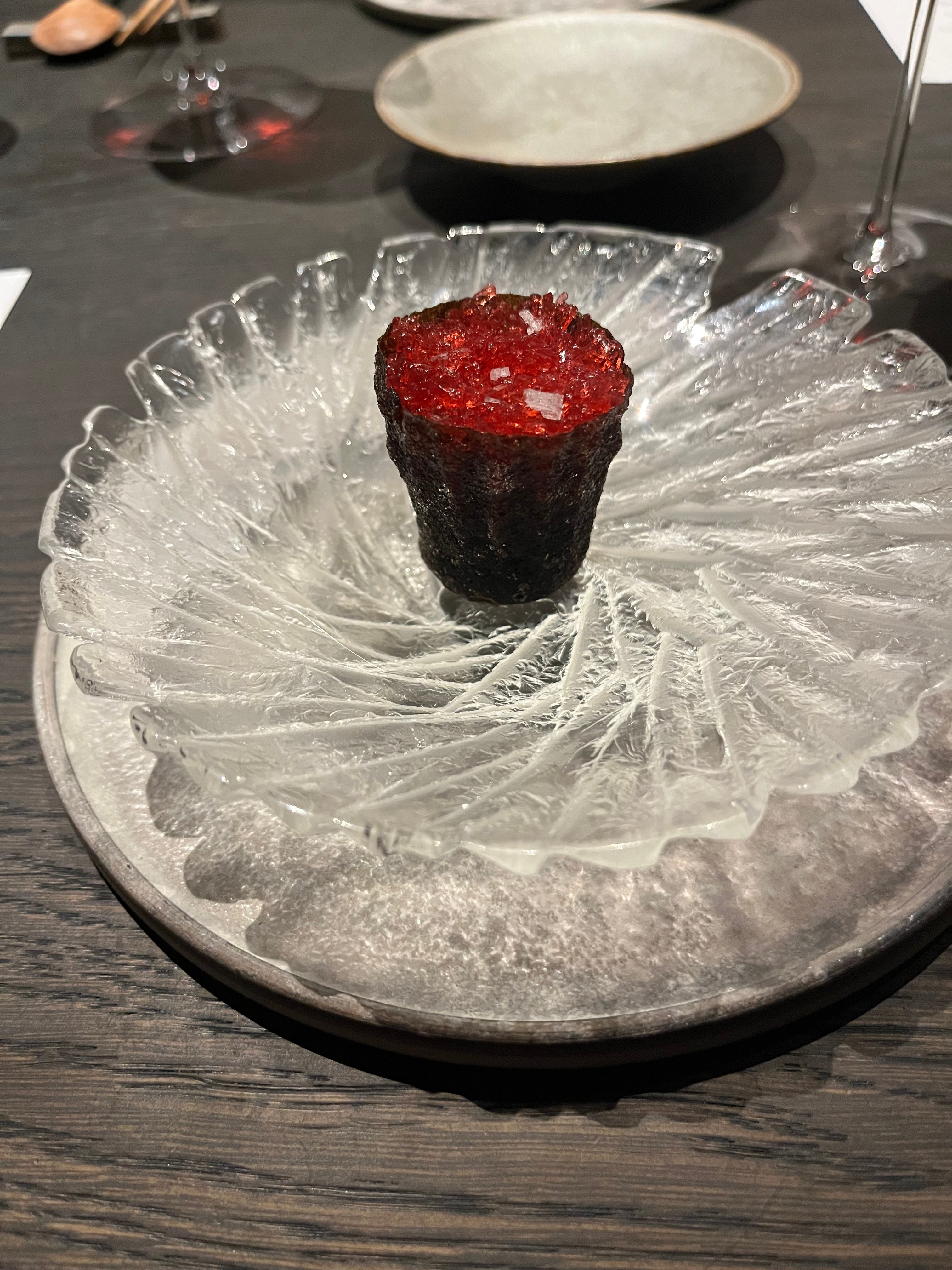
For example. Our meal begins with one gorgeous bite: a crisp seaweed shell (imagine an oversized, delicately fried maki) which houses a bit of squid and lots of finely shredded hibiscus gelee. It was visually stunning, texturally exciting, delicious, blah blah blah, but the real trick is that you feel like you just ate a caviar-filled panipuri, and washed it down with rosewater.
Technique is the name of Ukiyo’s game. Sauces, broths, and vinaigrettes were used to devastating effect, elevating dish after dish. Seasonings are assertive, especially by Japanese standards, where black pepper is considered spicy. At several points during the meal spices were brought to the table alongside dishes, for our appreciation. Here you could feel Ukiyo’s chef Toshi Akama’s provenance, as the former sous chef of Ikoyi, the notoriously spicy West African two-star in London.
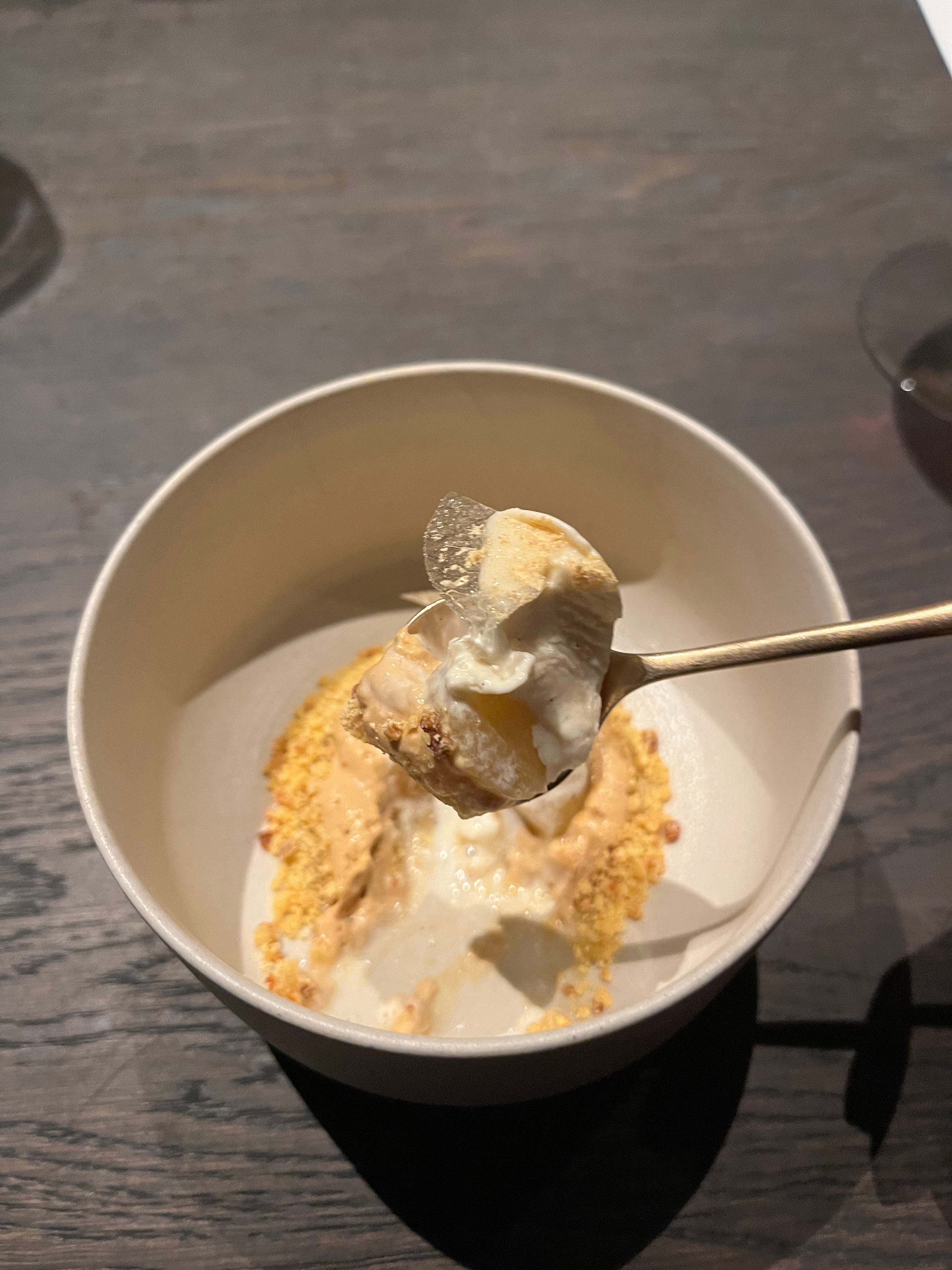
An exciting meal, on many levels. The night’s biggest surprise was dessert: vanilla ice cream. What? Vanilla ice cream? Snooze-fest. Bo-ring. C’mon, “vanilla” is literally synonymous with ordinary, generic, plain. And another thing: every single fancy meal in Japan serves ice cream for dessert. Ugh, not again. Expectations were low. Was that part of Ukiyo’s plan? Because then Ukiyo did the thing you see in movies where the ugly nerd girl takes off her glasses or gets a haircut or whatever, and suddenly she’s a babe. Except instead of glasses or a haircut or whatever, Ukiyo smoked the vanilla, and sprinkled a toasty crunchy caramelized rice topping over the whole thing. I think some other secrets were involved, too — ice cream black magic. That ugly nerd girl was a straight-up succubus by the end. Irresistible.
Also, shout out their wine program. Insane selection, at prices I can (sorta, almost) afford. We drank a ‘21 Metras Fleurie for like 120 bucks. Good luck finding anything close to that stateside, or even just finding that bottle, period. Is ‘21 going to be the best Beaujolais vintage of my lifetime? Could be. Tasted like a panipuri filled with rosewater-scented caviar, if I’m being honest.
Shirako Tempura at Ten Yokota (Roppongi)
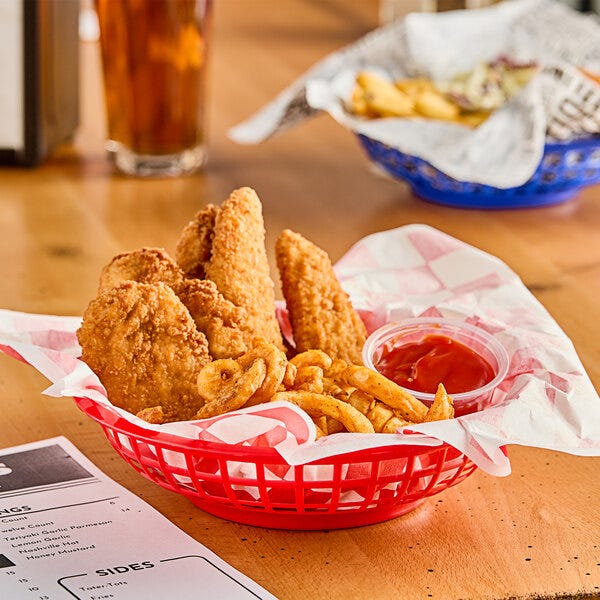
When you eat fried foods in America, my experience is that it’s usually a pretty chill, down-to-earth kinda thing. Your meal might be served in a red plastic basket atop a melamine cafeteria tray. Ketchup is often involved. Turns out, if you fly 7000 miles, you might find that the opposite holds true. All the stuffiest, most pretentious meals of this trip were at restaurants dedicated to fried stuff.
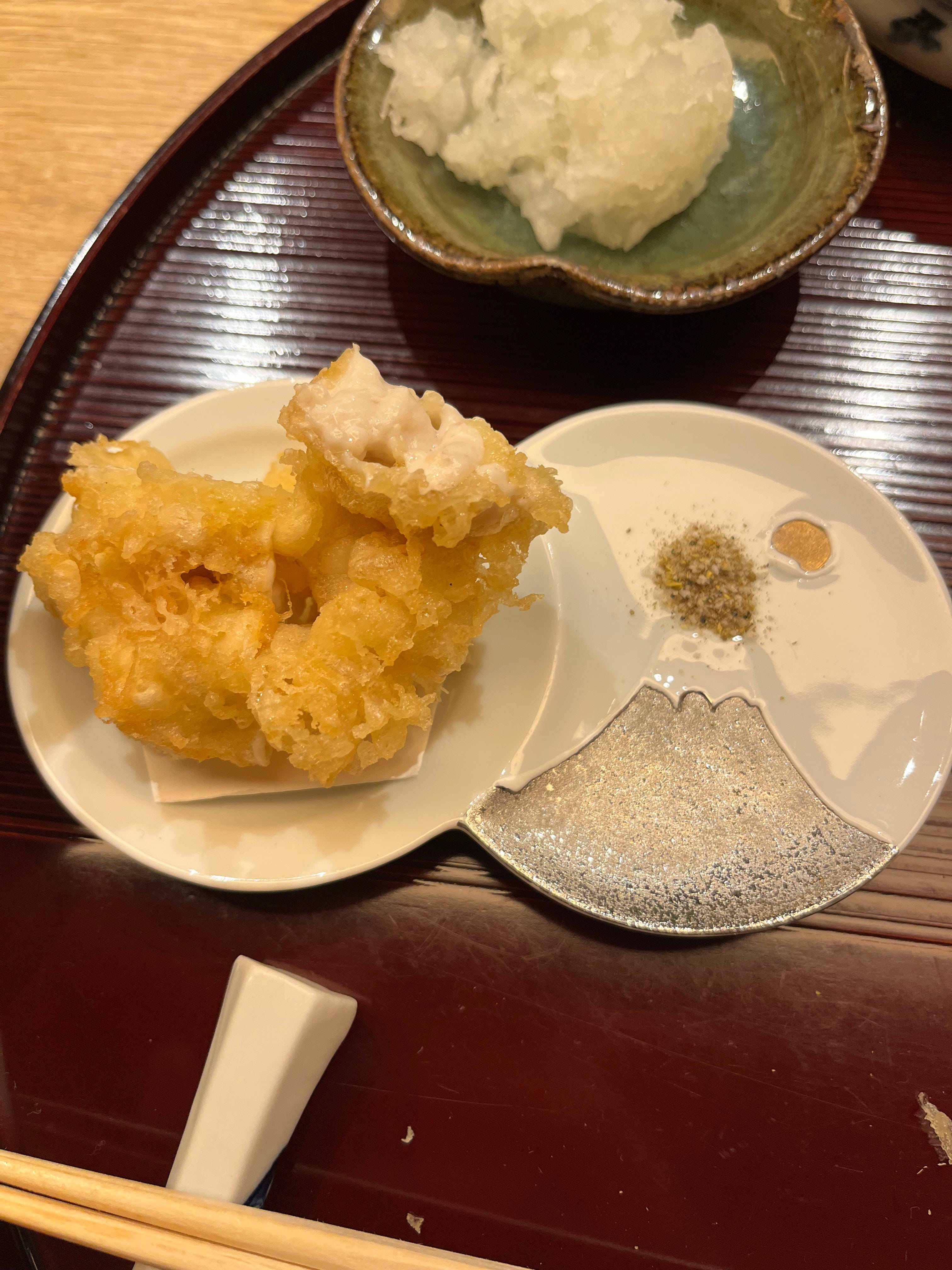
Our meal at Ten Yokota was eaten in almost-complete silence. Everyone was in awe of the chef, fawning on taisho like he’s a Boddhisattva. He plays the part well, lording over the room with a mysterious smile, giving commands. Instead of blessing us with prayer, he places a single piece of fried negi, or whatever, on the counter in front of you. He tells you to dip it in sauce or salt or nothing. You savor the bite. It’s delicious, admittedly. Granted, I think frying deserves more respect than it gets. But now imagine eating one french fry at a time, in dead silence, with many rules about how you’re allowed to eat said fry. Feels just the tiniest bit absurd, no?
Weird vibes notwithstanding, I’d been wanting to try kaiseki-style tempura for a long time, and Ten Yokota didn’t disappoint food-wise. The shirako was especially glorious: a fragile, glass-like crust, smelling faintly of sesame oil, surrounds fragile, creamy cod “milt” (in less-polite company you could say “jizz”). We had shirako in many forms on this trip and this one was top, due in large part to the textural contrast between crunchy and creamy.
Going forward, I wouldn’t want to eat cum any other way. Unless, maybe, a red plastic basket is involved. Midjourney Rule 34?
Kaisendon at Miko Shokudo (Ginza)
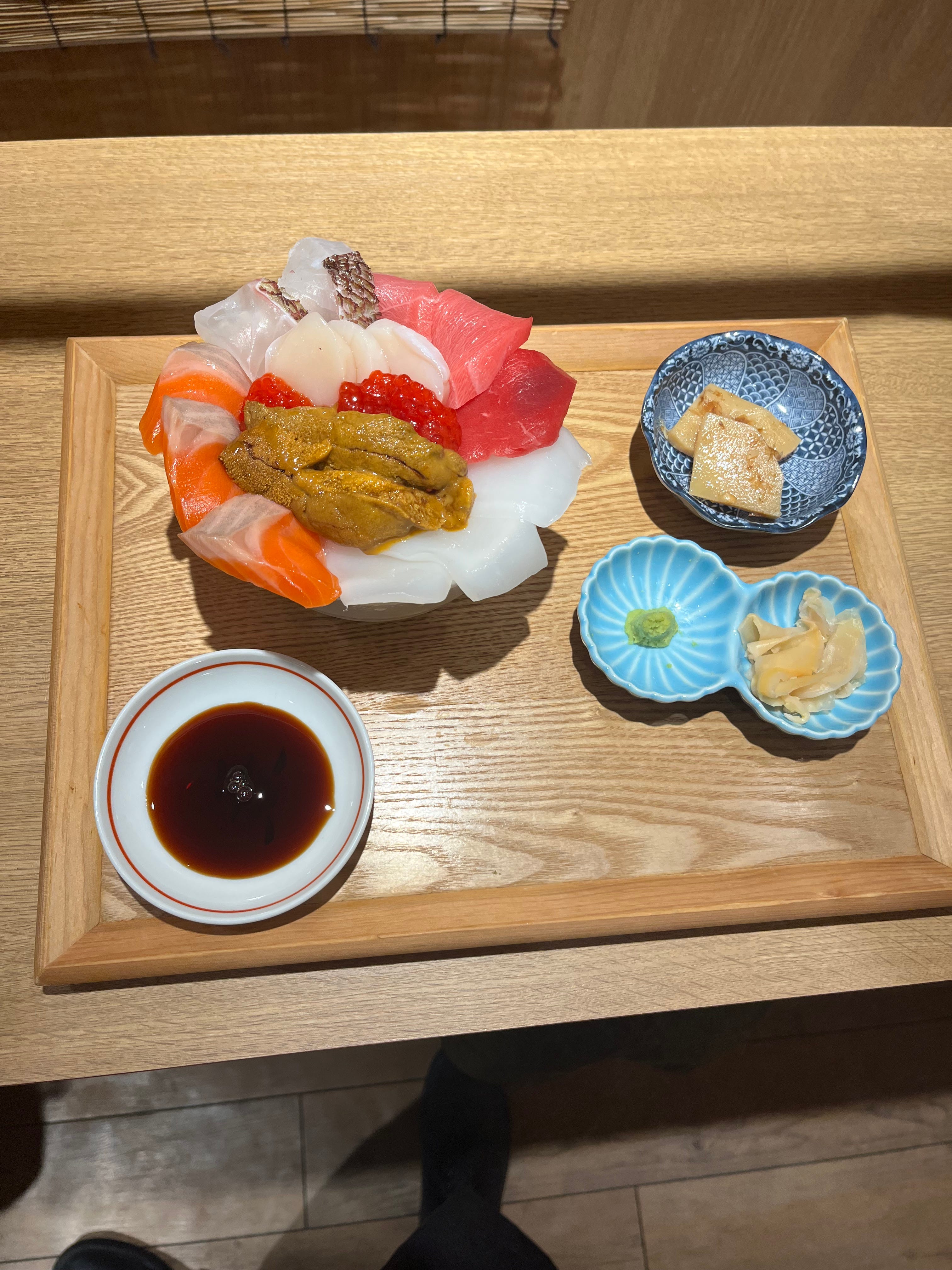
Dream lunch. When I was a Japanese salaryman in a previous life, I came here every day. Seafood rice bowls for cheap. Fresh fish, free soup and tea. Standing room only. You get a heap of high quality sashimi tuna, squid, uni, ikura etc. and it costs like 15$. Dream.
I’d truly eat at Miko Shokudo three times a week if it was in NYC. So would you. Here you get a poké bowl made from cat food and it costs like 28$ plus tax and tip. I hate it. It’s not fair.
Hopefully if I’m good during this lifetime, I’ll be reincarnated as a baby in Tokyo. Then I can grow up and become a salaryman and go to Miko Shokudo as much as I want. After I’m born my first words will be, “Hey, what’s up, I’m gonna become a salaryman so I can eat seafood in Ginza on my lunch break.” And my new mom will be like, “何だこれ?なんでうちの子が英語を話しているんだ?変人だ.” I don’t even know what to say to that.
Unagi Skewer with Liver Salt at Uomasa (Yotsugi)
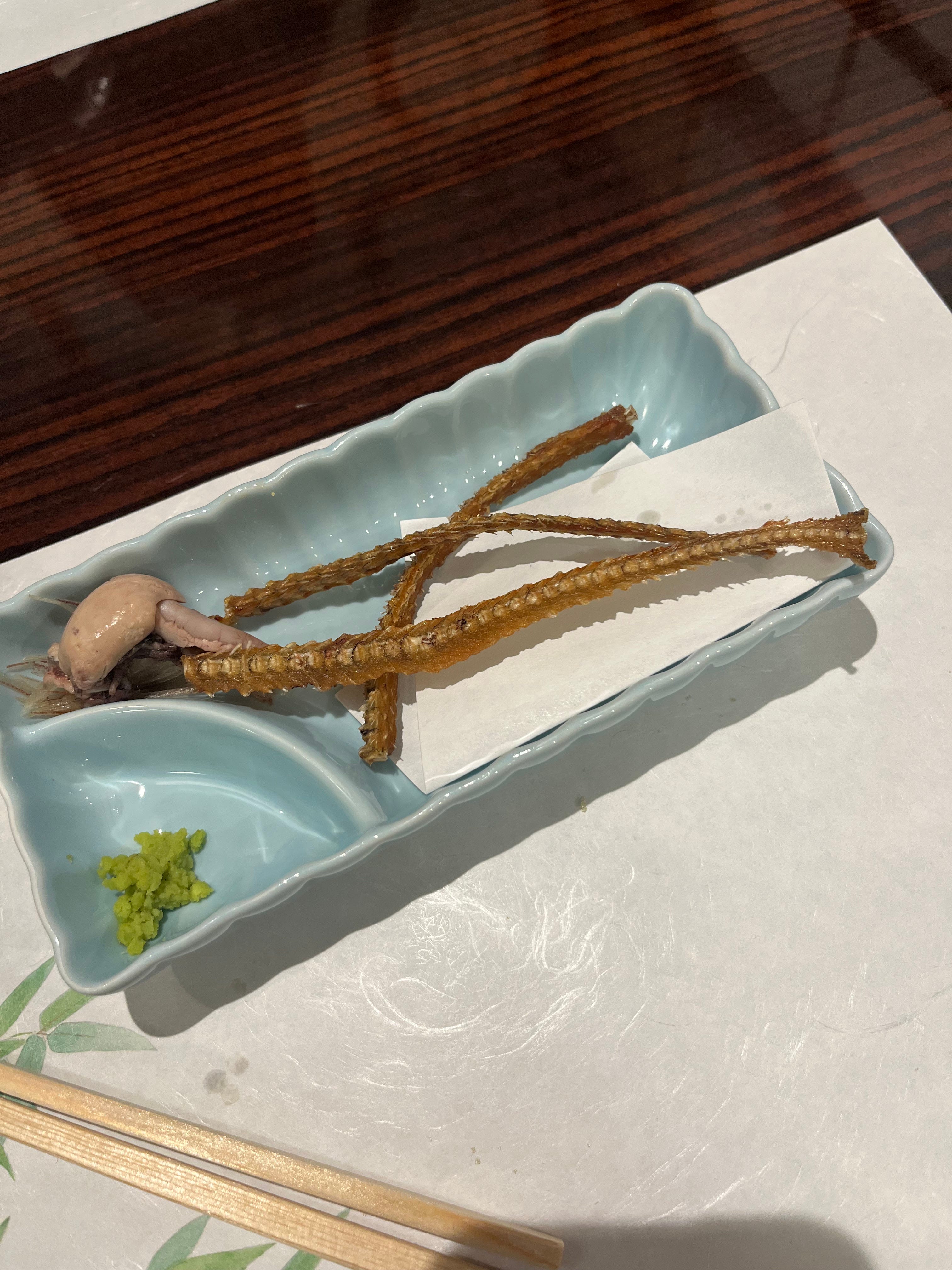
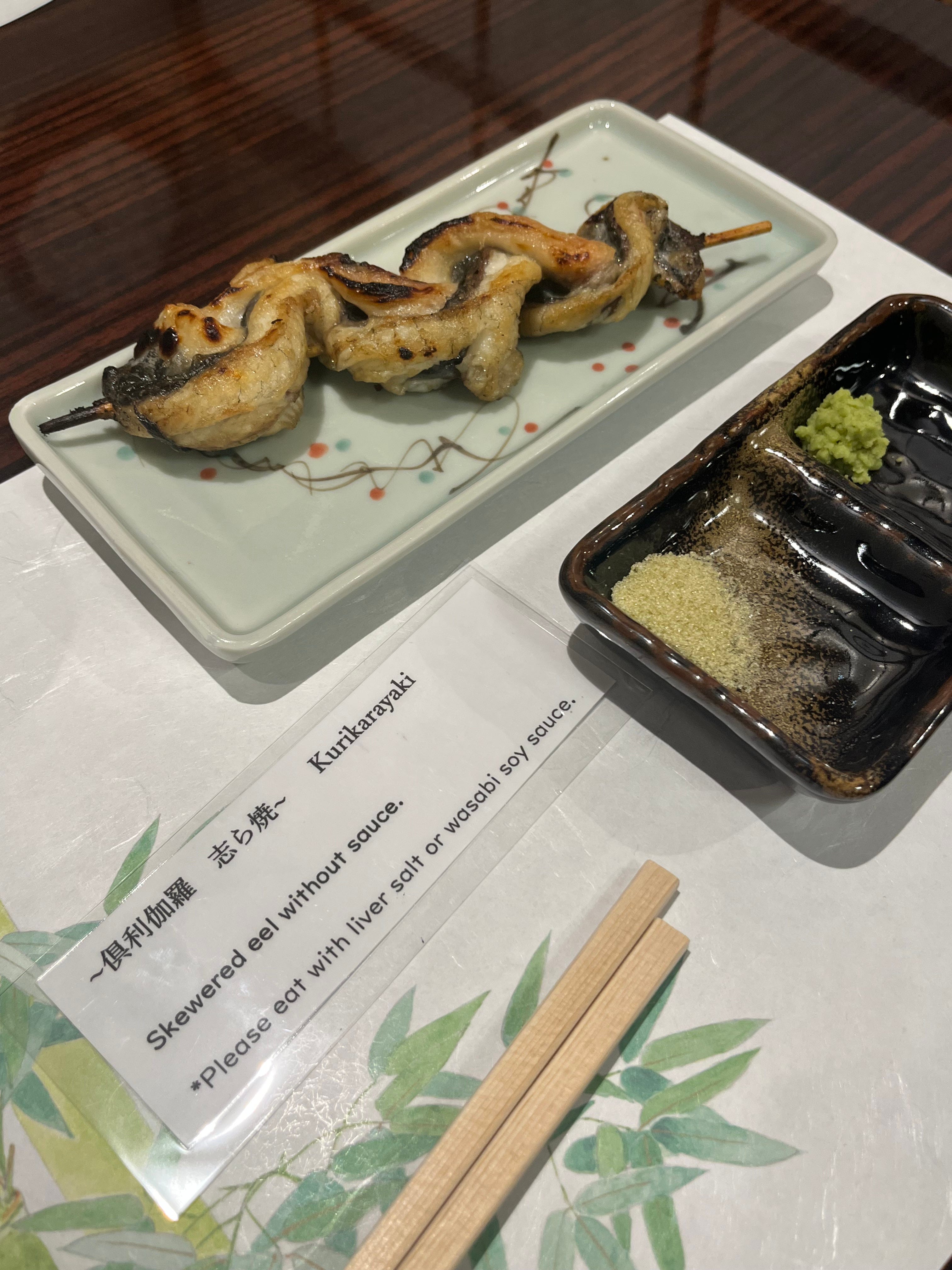
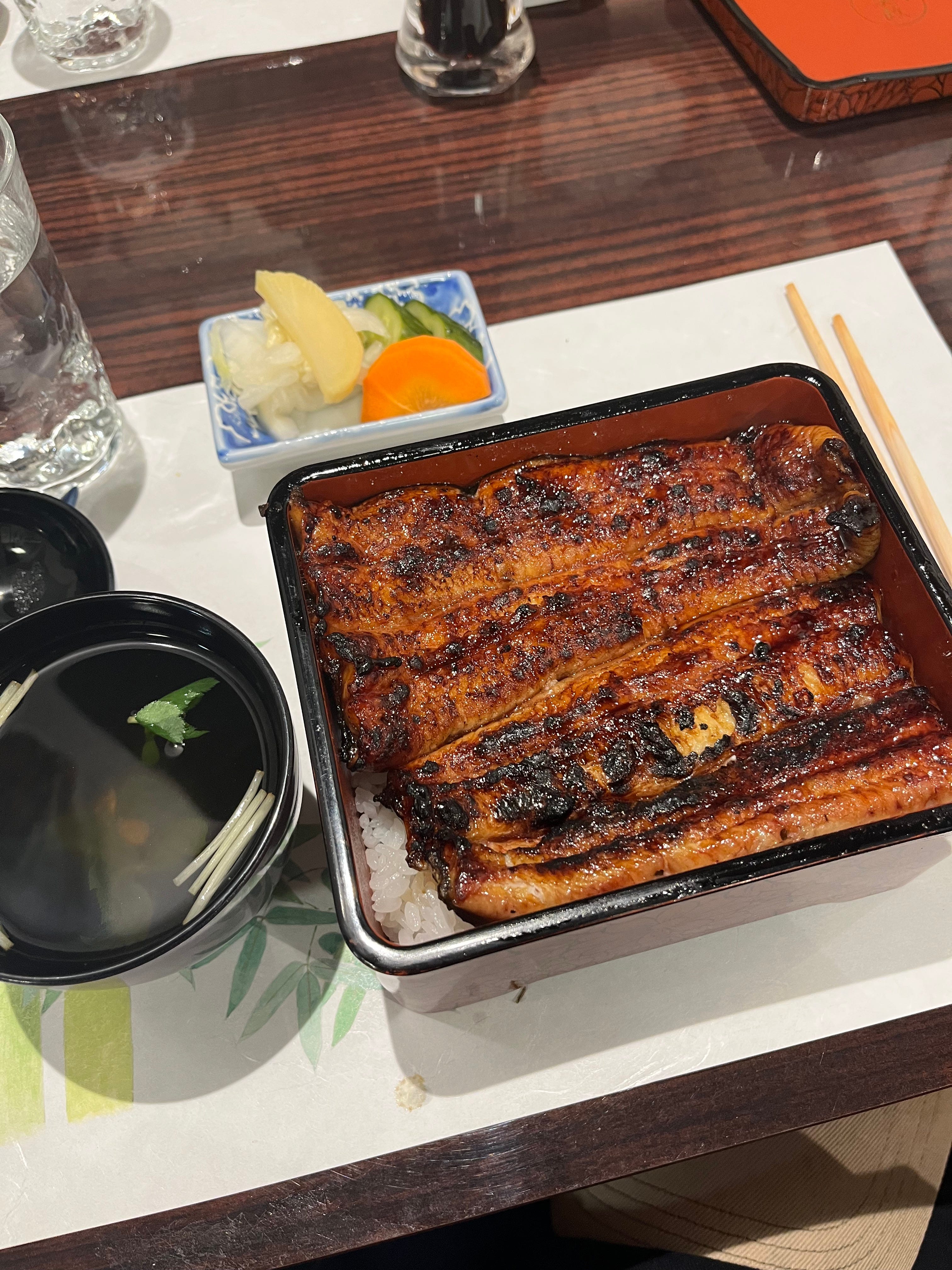
I don’t think a lot of people have unagi on their list of must-try foods in Japan. That’s a mistake. “Delicacy” is an understatement — it’s up there with the best wagyu or bluefin tuna imaginable. Uomasa gives you a real nose-to-tail experience of eel: first, grilled eel liver, next fried eel spine, grilled eel skewers served with liver salt, and, to finish, grilled eel filet over rice, lacquered with tare, optional sansho pepper on the side.
From a culinary thrill-seeking perspective, the first two courses were very cool. But from any perspective whatsoever, the last two courses were crazy delicious. High quality eel is very rich, very collagenic. The tare-and-sansho bento box version is almost too much. It’s already perfect served naked on a skewer.
Because of its high B12 content, eel is considered an energy food in Japan and, since the Edo Period, has been traditionally eaten in the summer months. It’s very hard to imagine how that works. Personally, after the meal I felt like I’d been drugged. I’ve had few meals as rich as that— it was comparable to mainlining tryptophan. By the end I was nodding off in my chair, blissed out, high off eel chemicals. I barely had enough energy to get home on the subway, let alone do Edo Period stuff, like fight for the Shogunate, or whatever.
If you can’t get a res, there’s also unagi vending machine outside. Is it worth it? IDK. So cool tho.
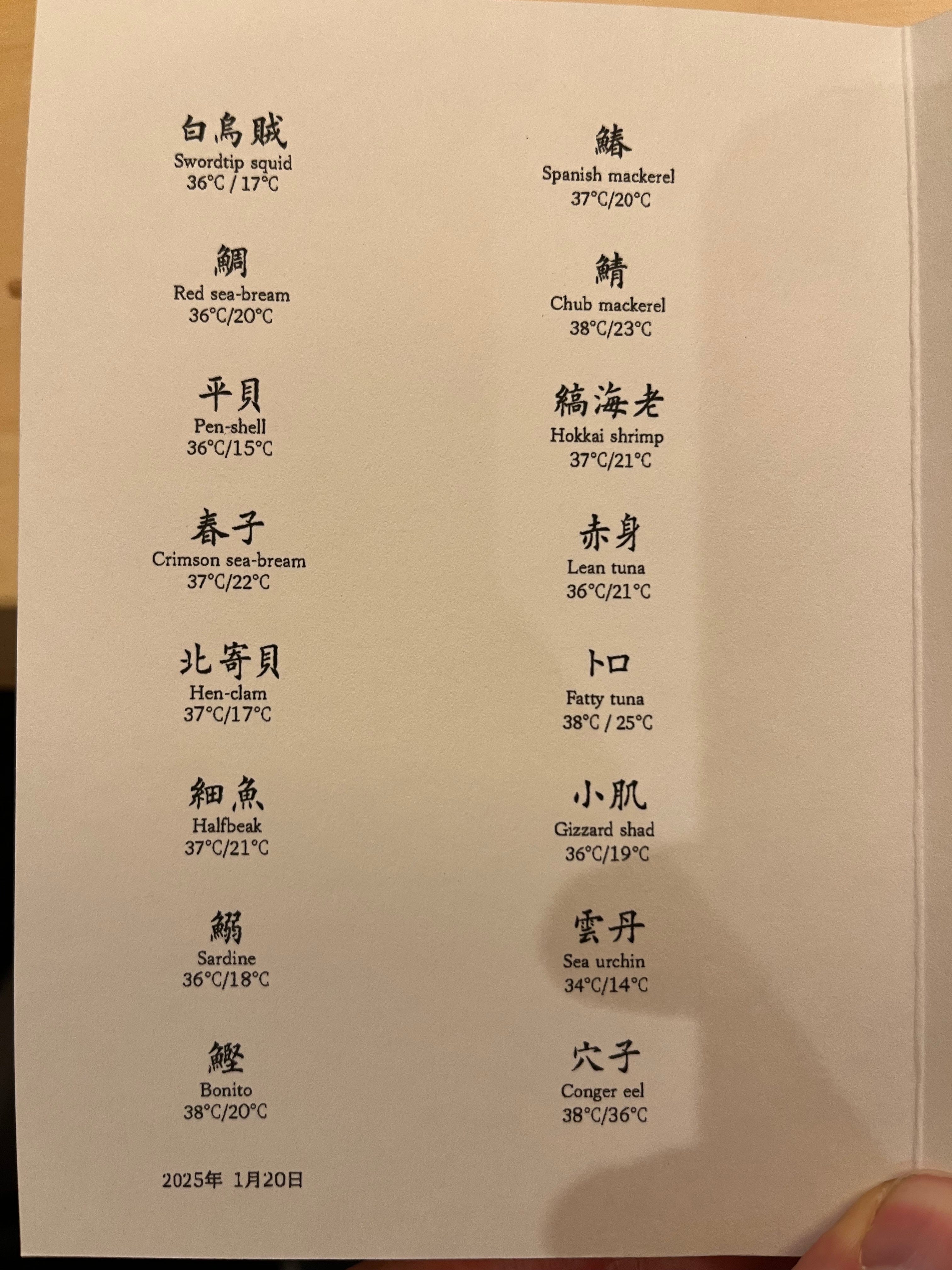
Ankimo at Sushi Namba (Yotsuya)
Ocean butter. Mermaid foie gras. A syringe full of seafoam.
This whole meal was pretty “fuck you.” So guess what? Fuck you.
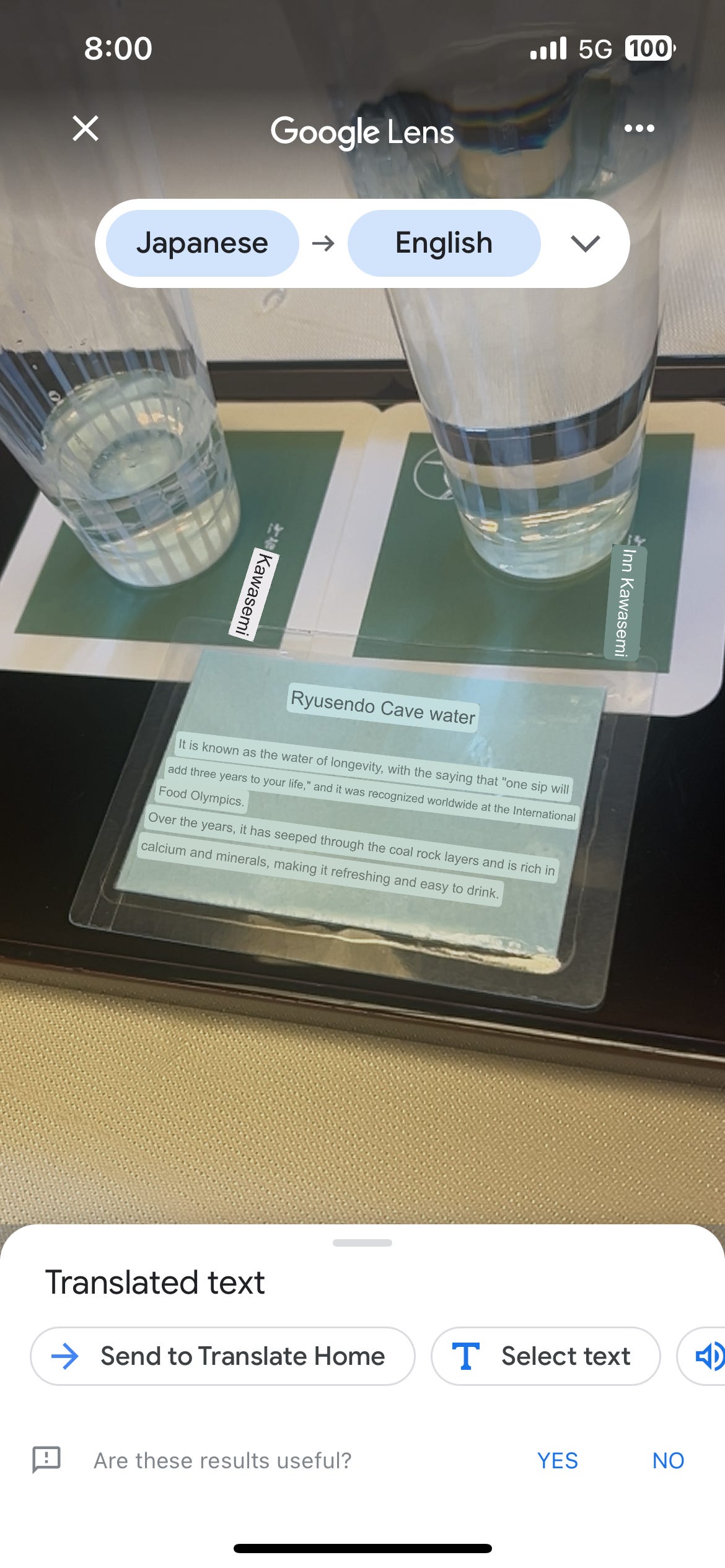
Ryusendo Cave Water at Onyado Kawasemi (Fukushima)
Cool, right? Tasted like water. Part of their excellent kaiseki.
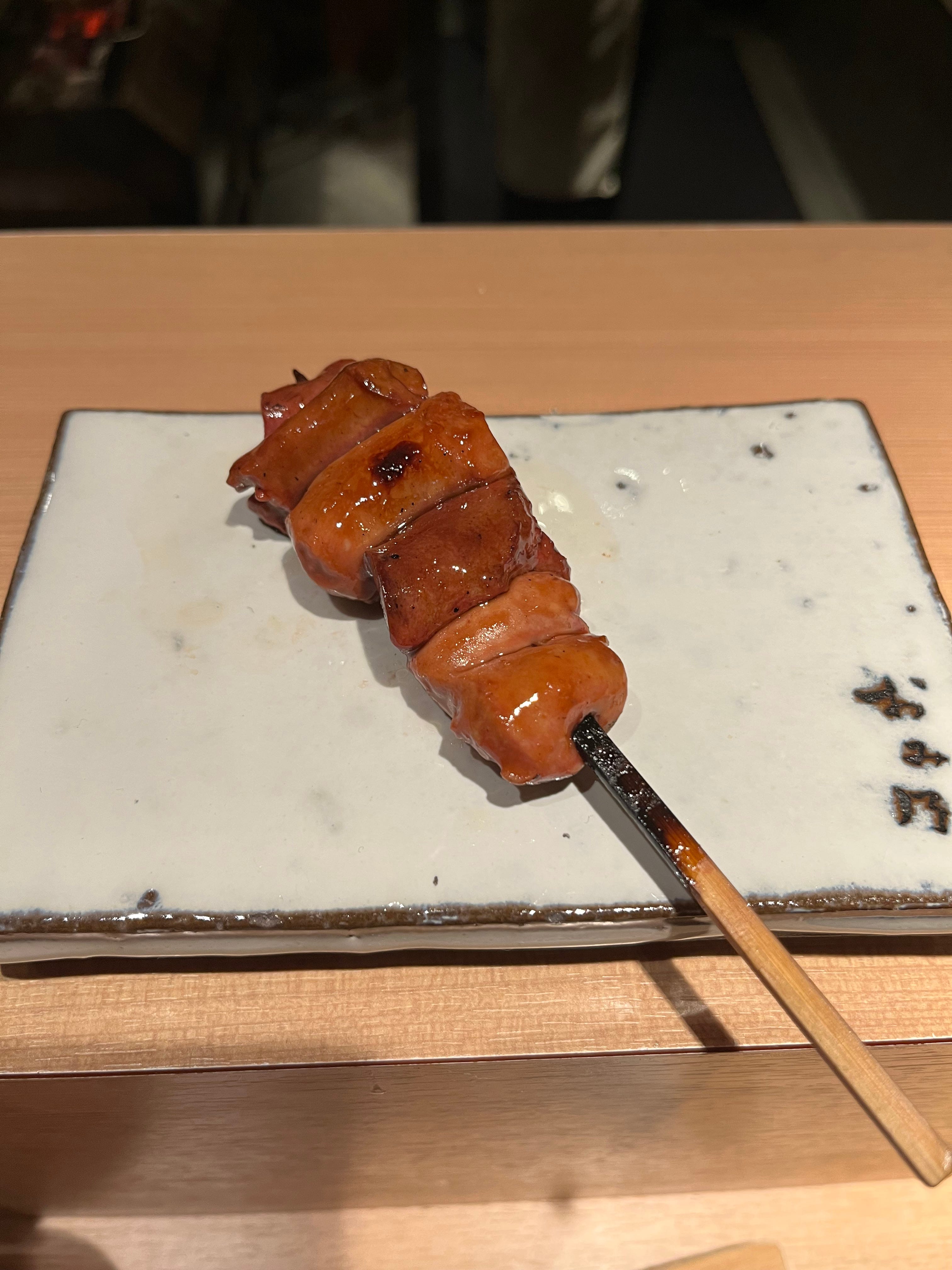
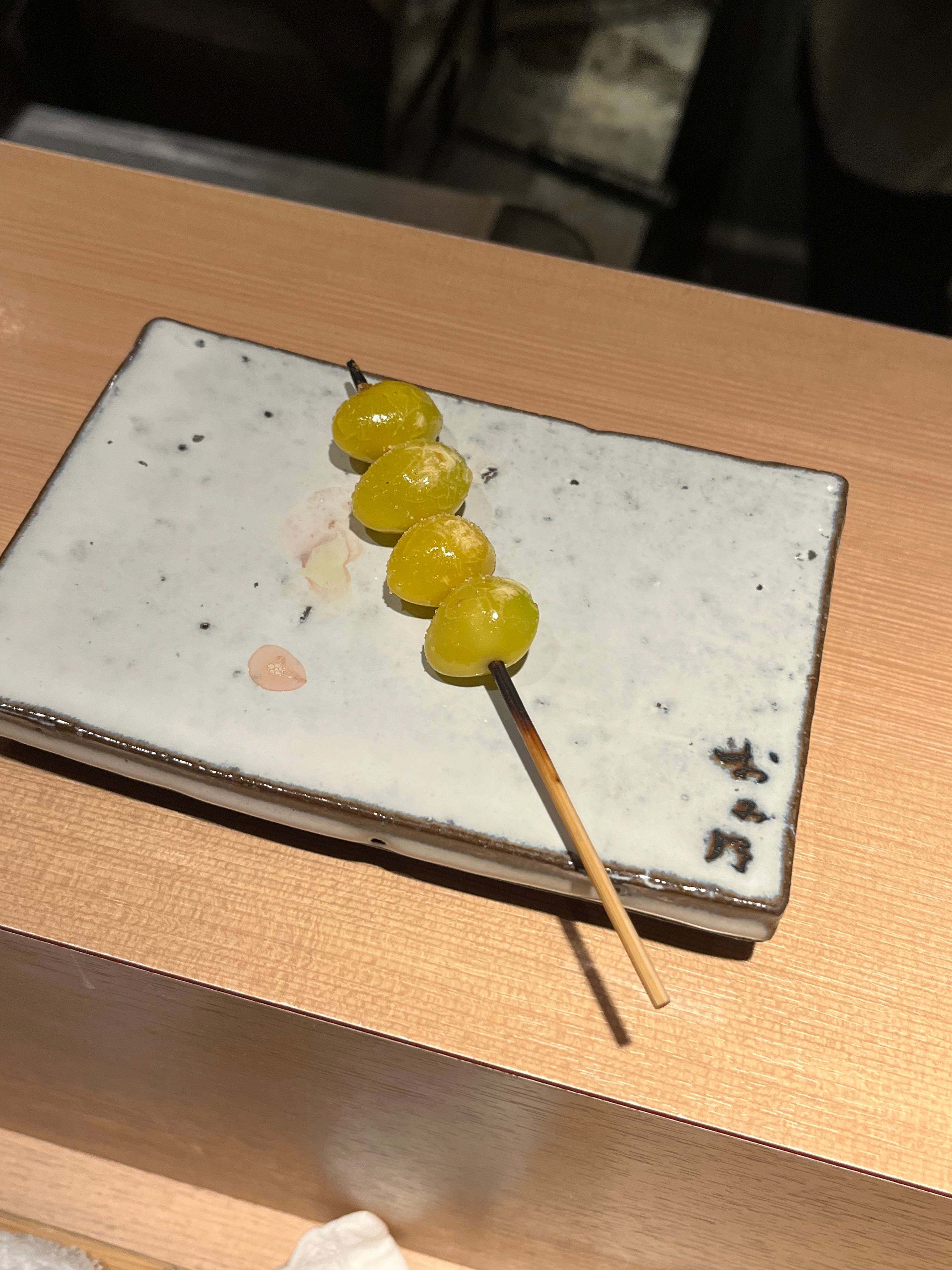
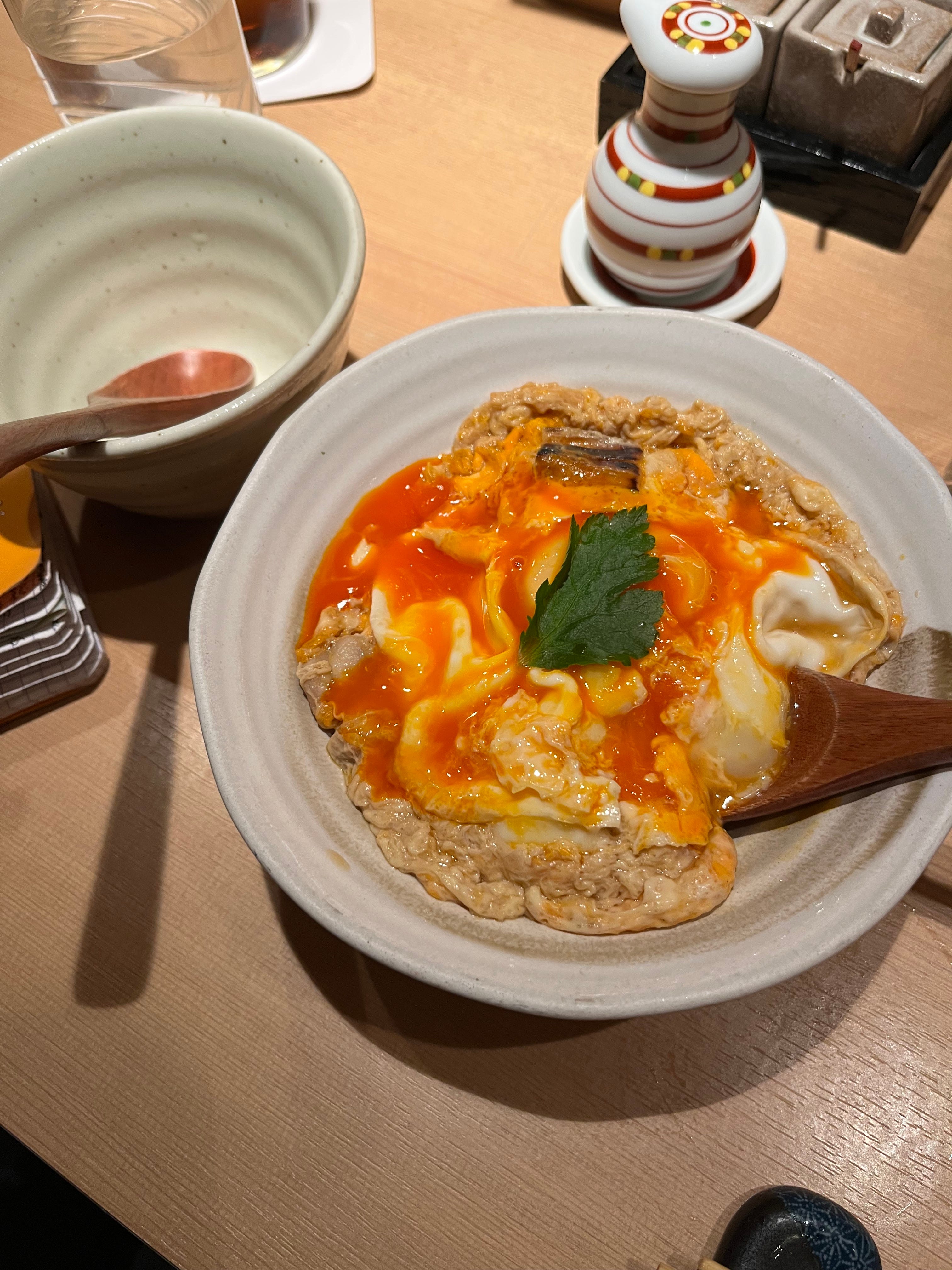
Chicken Liver Yakitori/Gingko Nuts at Yakitori Omino (Oshiage)
My Ashkenazi instincts will never say no to chicken liver in any form, but I wouldn’t be surprised if every other liver I ever eat is downhill from here. The whole meal was a glorious tribute to our planet’s most consumed lifeform (we eat something like 75 billion chickens a year) and there were too many mind-blowing moments to mention: heart, esophagus, shoulder, oyakodon at the end. Turns out chickens are made from a lot of parts, and if you know what you’re doing, all of them can taste good. This kinda meal is so special because you feel like you’ve re-discovered a sublime potential hidden inside something you’ve long since taken for granted, breaking through the stale prison of habit etc. Anyone who has taken psychedelics can relate, “Wow, man, look at that cloud, it’s so beautiful, I might cry…”
As we paid homage to the bodies of birds, piece by piece, occasionally our chefs would throw in some plant matter, to mix things up. I don’t get yakitori for the vegetation but the ginkgo nuts really took me by surprise. In a way they reminded me of really good Sicilian pistachios, but more cheesy. Weird grilled pistachio-adjacent nut-cheese — what’s not to like? Neurotoxins, for one. That’s the catch: the eponymous Ginkgotoxin. Enjoy a few too many and they will send your Vitamin B6 levels plummeting, leading to seizures, hospitalization, death. So why are we eating these things? Because there’s a threshold. What kind of threshold? In the medical literature, some cases say 20, some say 40, some say 80. Everyone is different. We were served four a piece. I felt I could have eaten more. They were really delicious. I was tempted, for a second, to discover my own limits. Malu didn’t finish hers so I had a fifth, then a sixth. I’m still here. Or so it seems.
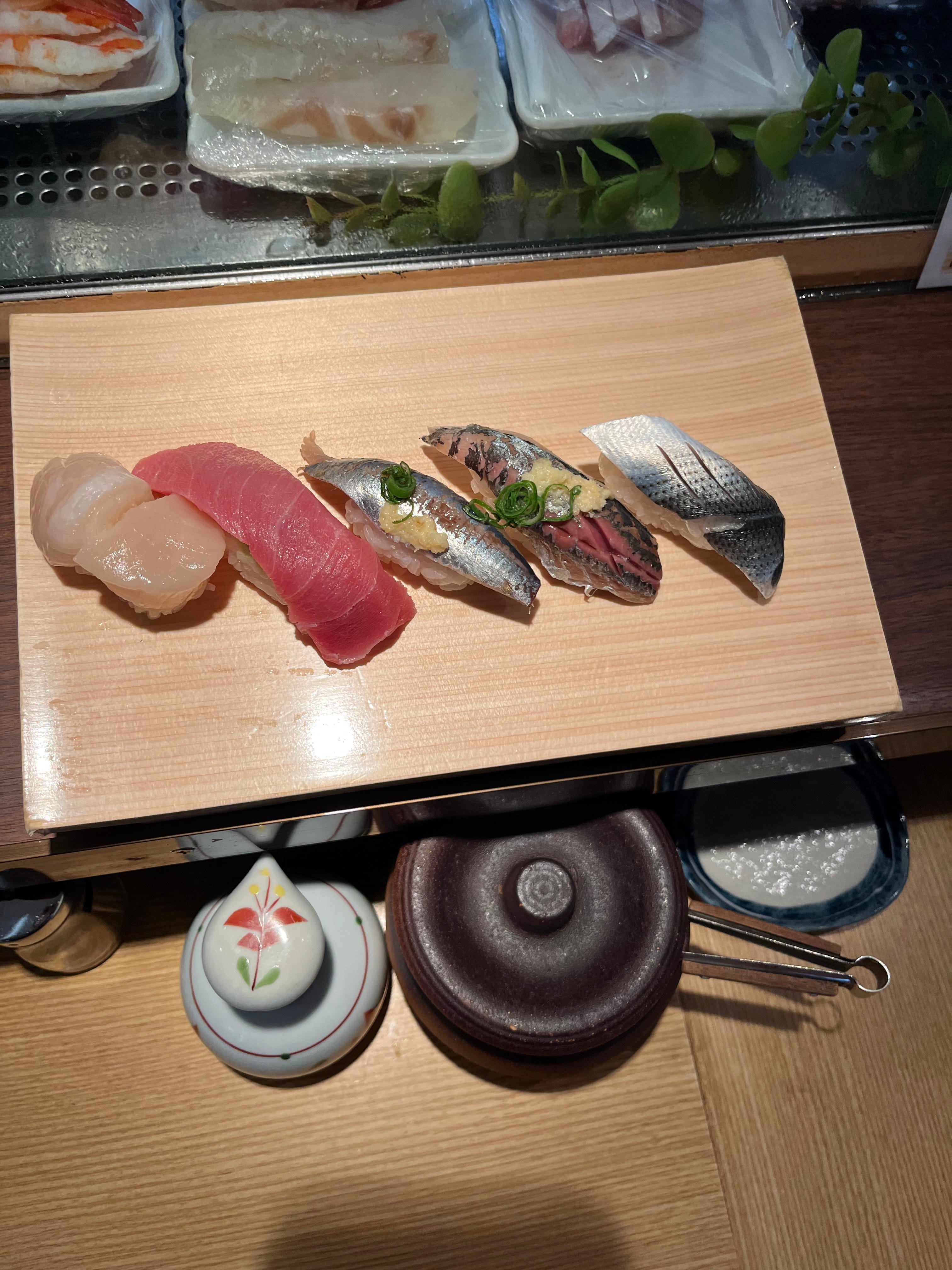
Sushi at Magurobito (Ueno)
Dream lunch. Standing-room only sushi counter — fast, cheap, delicious. Obviously, when compared to a 300$ omakase, consistency suffers. But for less than a tenth of the price, it certainly delivers much more than a tenth of the pleasure. Fish quality is just so much higher on average in Japan. So even if you’re eating third-rate nigiri, by Tokyo standard, it’s still likely to be the best thing you’ve ever eaten.
Play it smart. Avoid luxury ingredients. Get the negitoro, hotate, kujira.
Ebi Fry at Tonkatsu Narikura (Asagaya)
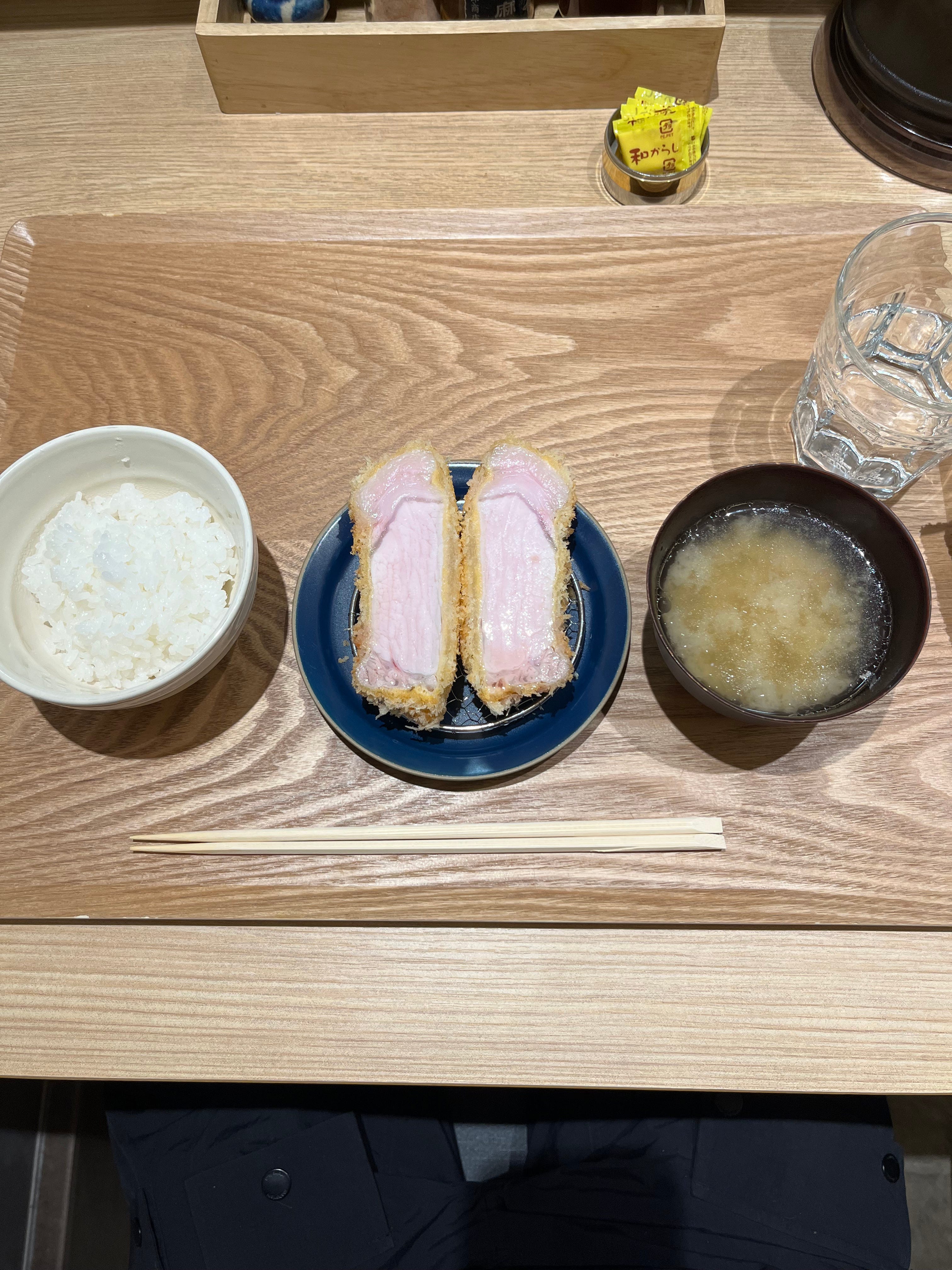
Another laughably uptight fried food restaurant. Stony silence from start to finish. Lots of rules about how to eat every bite. Guys, chill out, we get it, you’re serious.
All the same, maybe it’s this annoying perfectionist attitude which leads most Tokyo food nerds to call Narikura the best tonkatsu in the city. One thing that sets Narikura apart is frying their cutlets at a very low temperature — the resulting pork is ridiculously tender and succulent, and the breading on the outside is very light in color, with hardly any Maillard browning. Of course they are psychos about sourcing too, and they email their Omakase.in customer base several times a week, with updates about different cuts from different breeds, Chateaubriand from Tokyo X or whatever, available for one day only, act fast etc. Gotta give Narikura props for taking pork connoisseurship to new heights.
However, I realized something after Narikura: when it comes to tonkatsu, honestly, I’m more excited about the fried crust than I am the cutlet. Yes, the pork is delicious, perfectly cooked, and so on. But they might as well have served me a sous-vide pork chop. When I order tonkatsu, I want that flaky, crunchy, golden-brown Popeye’s crust on my tonkatsu, please and thank you. Before I even get to the meat, I want the breading to hit like a bowl of deep fried cornflakes. Narikura’s pale breadcrumbs melted away into inconsequentiality, like snowflakes on my hot tongue. I want my teeth to descend into a forest of deep-fried icicles.
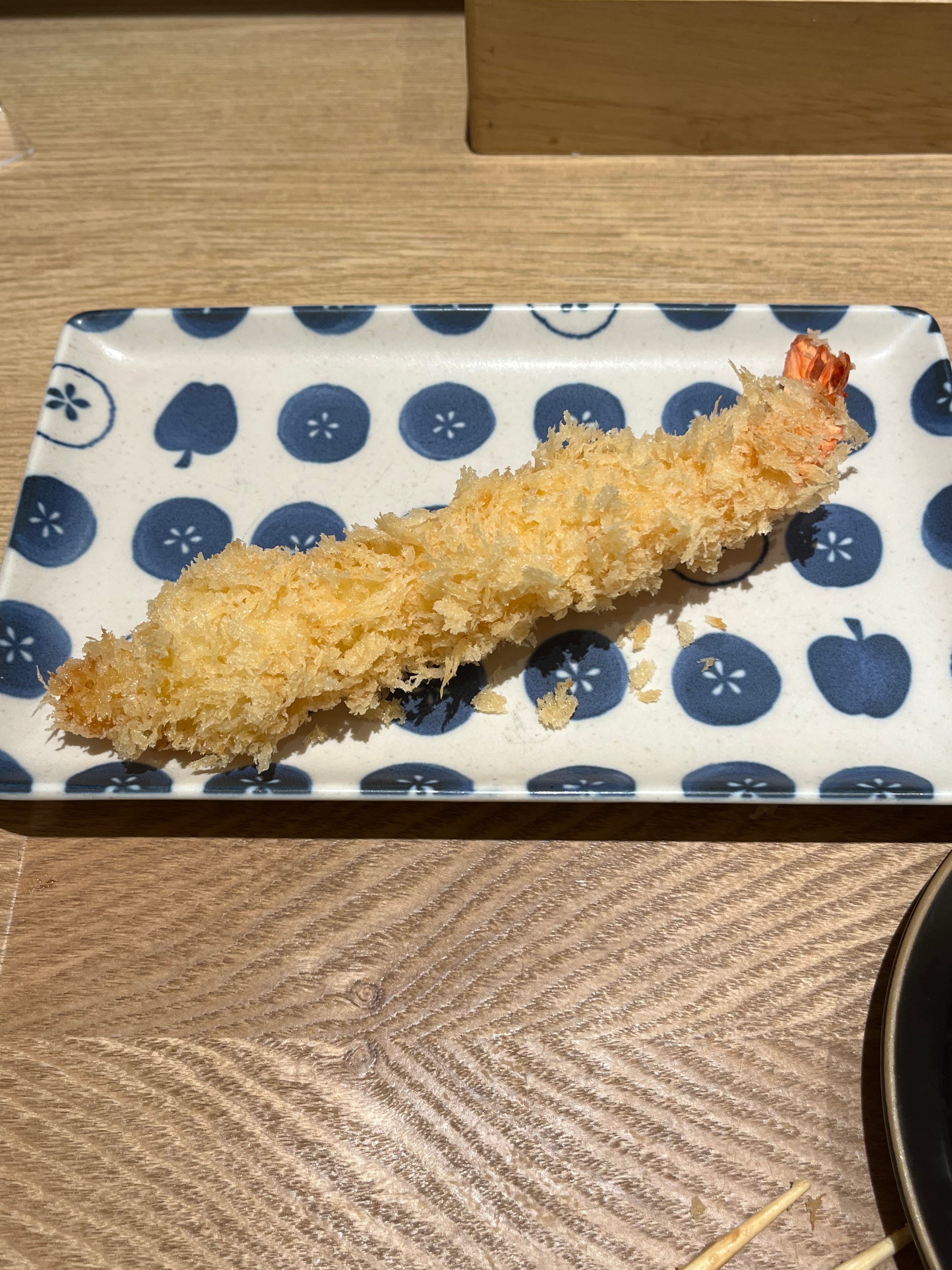
I would have walked away disappointed, defeated, if it hadn’t been for the fried shrimp on the supplemental menu — just a single piece, a throwaway option in case you’re still hungry, in this temple of pork. Thank God — it arrived in an avalanche of batter, a shrimpy snowman buried beneath two inches of spiky, crunchy, fried frosting. A deep-fried winter wonderland. Heavenly.
Setsubun Kakigori at Sabo Okuno (Shibuya)
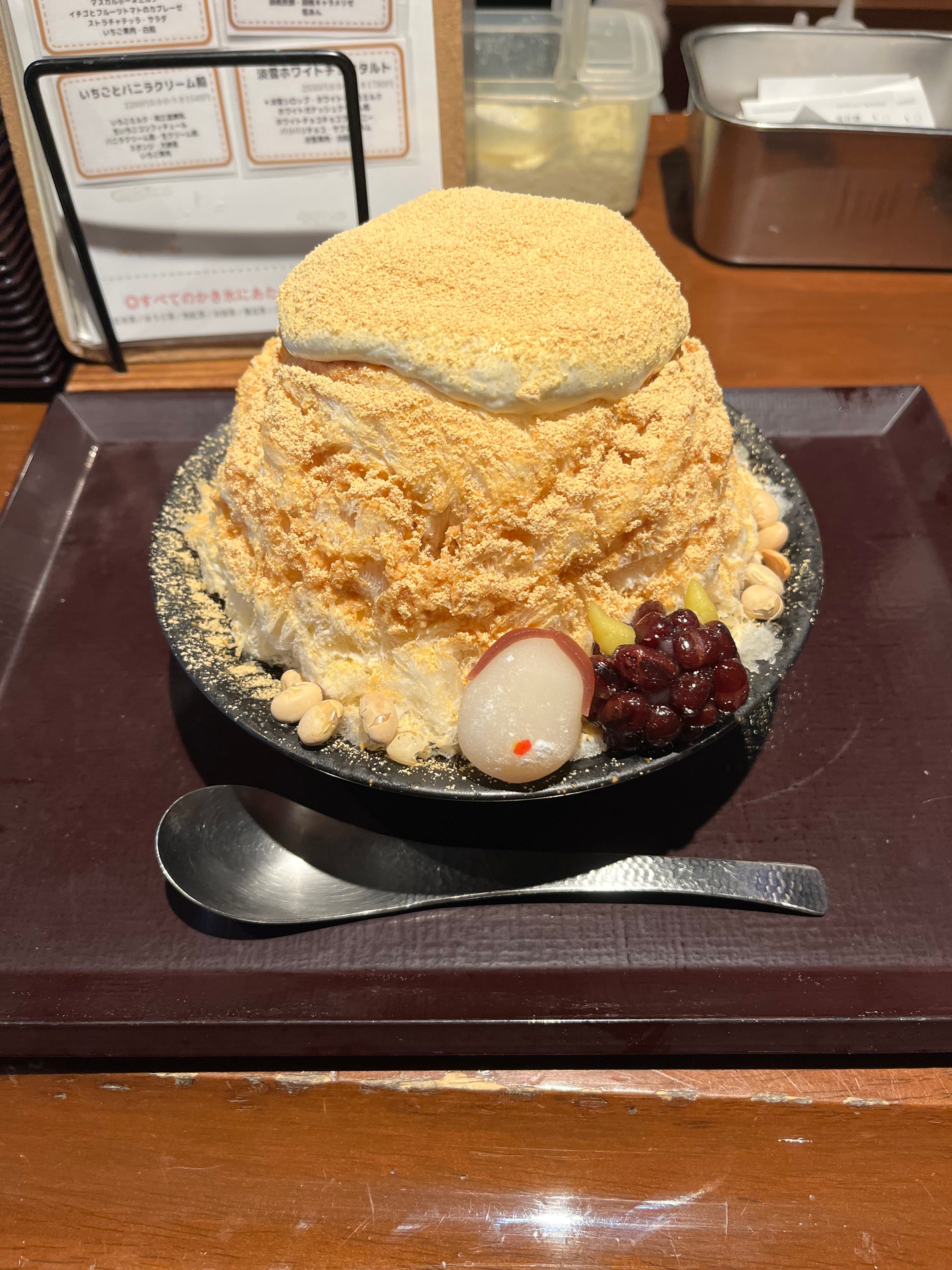
It’s only a matter of time before everyone and their mother is obsessed with kakigori in the West. If you asked most Americans and Europeans in 2025 what foods they want to eat in Japan, I doubt even a hundredth of them would list kakigori. Soon that will change. I think kakigori hasn’t caught on yet in America because it undersells itself — essentially it just sounds like Japanese shaved ice. It is just that, but the trick, of course, is that it’s Japanese, and the Japanese make everything as good as it can possibly be, don’t you realize that by now? So in the whole wide world of frozen desserts there’s simply nothing that comes close: sorry gelato, sorry sorbet, sorry paletas, I love you all, you just can’t compete.
I barely eat ice cream in the summer. I couldn’t be bothered. But here I am, freezing my ass off in January, and I can’t stop eating kakigori. On my last day, at Sabo Okuno, I had The Very Best One, a Setsubun-themed offering, topped with mascarpone espuma, kinako powder, adzuki beans, and a rice cracker crumble. So many textures, so much umami, sweet and savory and nutty and creamy and crunchy and and and…
Mackerel Special Breakfast Set at Yoshinoya (Tokyo)
“Find a breakfast you love and you’ll never have to… uh… think about what you’ll eat for breakfast again a day in your life” — Someone, Somewhere, Probably
This was my first meal, my first morning in Japan, and it was my last meal, running late in Haneda, with barely ten minutes to catch my flight.
Mackerel fillet, natto, raw egg, hot rice, miso soup, scallions. Perfection.
ごちそうさま でした!